Hi Eric,
Whatzmadder--could not see down in the mech compartment due to smog ??
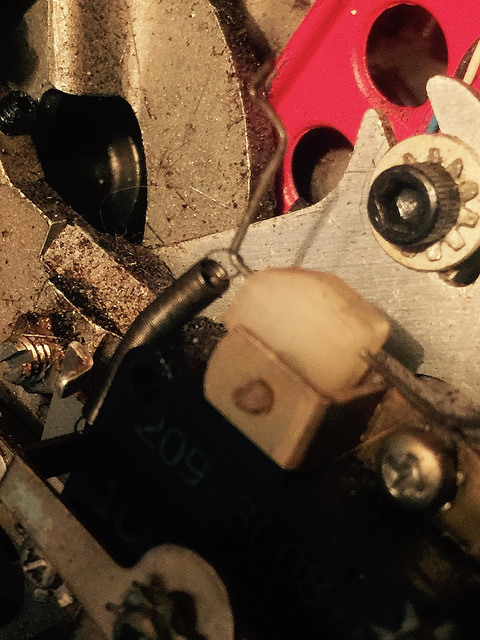
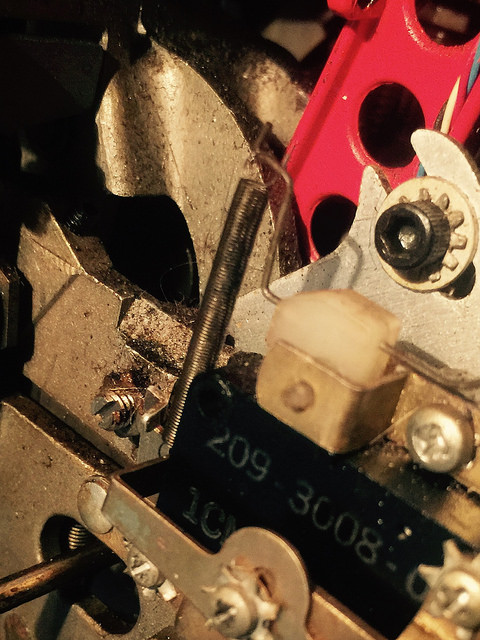
That spring often "falls down" (all by itz-self, if you wanna believe the people who tell you that !)--

As for Rob's suggestion on the damping situation--He and I dis-agree on this and I guess always will--
Seeburg spent probably more money on engineering of the tone arm then any other part of that mechanism--they engineered it once for the 78 RPM models, then again for the totally re-designed 45 RPM player, then again for the first stereo players, then again for the PFEA models--but--they elected not to equip the PFEA models with the new cartridge, as they had "damping problems" show up in testing. They delayed the introduction of the new tone arm/cartridge/stylii, till the next year. The SS-160 came with the totally redesigned suspension system to accommodate the new audio system. This arm was painted "Seeburg Red" and shortly after it's introduction in the SS-160 ( and a brown colored larger version used in the HSC series units), they began seeing alarming rates of sales for the new (yellow-violet) needle .
Investigating the reason for the large sales numbers, they found that the needles were being "broken" often. Investigating further, they found the reason was the damping fluid was leaking out of the new style tone arms, at a very rapid rate, causing the needles to "bang" against the records. This lead to another re-re-design of that tone arm and the painting of the one for the 160 mech going to a green/blue color. They did not change the color of the HSC type, just the cylinder that holds the fluid. "100 select mechs" from the time of the re-design had un-painted arms, and used different springs/ color needles, for the heavier tone arm pressure suggested.
Another factor in this is the cradle construction--that cradle is meant to be "tense" --the correct tension is achieved by that "grub screw". It was tightened to spec by a really nice little old ( almost blind, in her later days) lady, who I just loved to visit while she worked--was amazing to watch her do the final assembly and checks to that unit--she did it by feel, and sound ! They shortened that screw on the last type cradles, and glued it in instead of having a locking nut. IMHO, IF you must remove that screw for any reason, at least make a mental note of where you found it--and put it back exactly the same way !! BTW--on the ones without a lock nut, you will need a screwdriver that fits the screw very well, if not exactly--I have changed hundreds of them !! Ron Rich