

Another newbie question from this newbie.
I have the opportunity to purchase a late 1920's Columbia-Kolster phonograph. I've started collecting accoustics (I have a Grafonola and a portable wind up) and stumbled across this. It's an interesting piece for several reasons.
As I understand, this was an early electric phonograph - but in mechanism only(?). I am basing this on a few tid bits gleaned online as well as info from the seller (who admits he doesn't know much about it). It has a motor, and wires running to the stylus housing (at this stage can you call it a "reproducer"?), but the stylus is of the acoustic, play-once steel needle type, and the sound is amplified via an acoustic tone arm into internal horns. It is not, despite asking, a combination tube radio / phono.
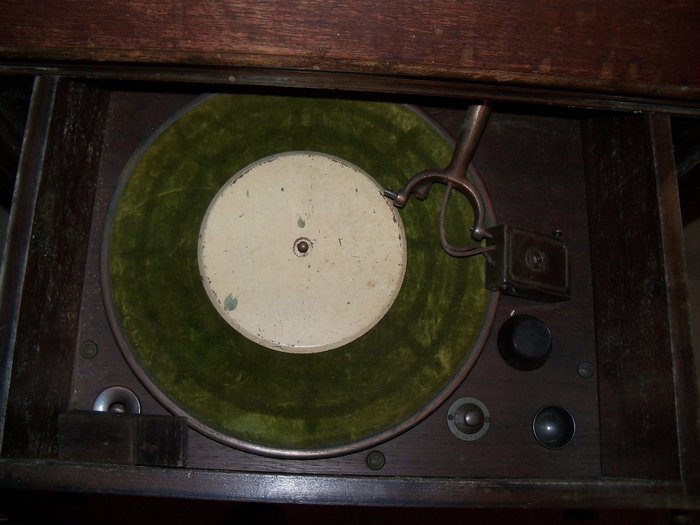
- The Kolster's Turntable
- Kolster.jpg (102.82 KiB) Viewed 913 times
It's an odd duck. Not quite electric or acoustic. (As such, if this needs to be moved to the acoustic forum, admins please do so/let me know. I would post about it there as well, but didn't want to cross-post.)
Does anyone know about these models? What kind of "soundbox" does it use? Are parts going to be impossible? What kind of wiring will I need to do to power it up through modern outlets?
Effectively, is it worth getting or should I run away screaming?
 It sounds neat (not literally, just historically), hence my interest. It also is housed in a nice looking piece of multi-purpose furniture (which the Mrs greatly appreciates).
Thanks!

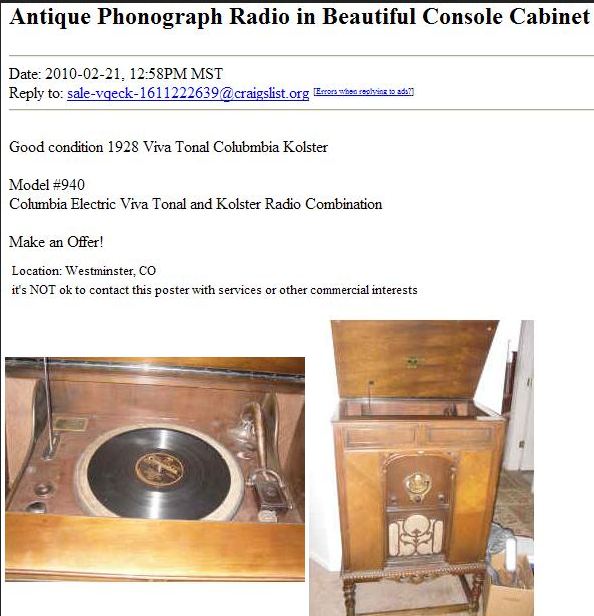
 ) so it seems like a "hot potato" for some reason. My guess is the wiring.