Again, I am new to the antique phonograph hobby and I have a question about an occasional issue I have with some of my records:
When using a NEW needle, occasionally, (not always) there with be a little black residue or dust of the needle after playing a disc.
I assume that this is the by product of record wear.
Is it caused by.....
A. A allready worn record? trust me, some of mine arrived in well used condition.
B. A improperly adjusted reproducer? This could be possible as both the players I have use as found reproducers. (Orthophonic and a needle cut edison type reproducer.)
c. The record itself? it seems the quality of the record material varies.
D. All of the above in some combo? Or some other reason I should look for ....
Thanks again for your help.
ed

78 Record Issue?
Q&A about Talking Machines from the pre-electronic era (approx. 1885-1928).
-
Joe_DS
- Forum Moderator
- Posts: 1056
- Joined: Thu Jun 08, 2006 4:23 pm
- Location: San Francisco, California, USA
The answer is yes to all of the above, but I'd start with the reproducers, especially if they are as-found. Aside from a worn needle, nothing will chew up records faster than a semi-frozen sound box.
The Orthophonic sound box, in combination with the well-designed tone arm, should actually produce minimum record wear, but only if it's in good playing condition. So, if you haven't done it, I'd recommend that you at least replace the ball bearings. The basic procedure is described on this page: http://www.gracyk.com/orthosound.shtml
Ignore the part about stabilizing the rubber gasket holding the brass O-ring in the throat portion of the sound box, since replacement rubber should be installed in place of the frozen original rubber. Doing this will also reduce wear and tear on the record. Also, avoid getting any WD-40 over-spray on the diaphragm, since there have been reports that it can damage the aluminum over time.
(I'm not sure what to recommend concerning the needle cut type sound box for the Edison DD phonograph, since I don't know what style it is. If possible, could you post a few photos?)
JDS
The Orthophonic sound box, in combination with the well-designed tone arm, should actually produce minimum record wear, but only if it's in good playing condition. So, if you haven't done it, I'd recommend that you at least replace the ball bearings. The basic procedure is described on this page: http://www.gracyk.com/orthosound.shtml
Ignore the part about stabilizing the rubber gasket holding the brass O-ring in the throat portion of the sound box, since replacement rubber should be installed in place of the frozen original rubber. Doing this will also reduce wear and tear on the record. Also, avoid getting any WD-40 over-spray on the diaphragm, since there have been reports that it can damage the aluminum over time.
(I'm not sure what to recommend concerning the needle cut type sound box for the Edison DD phonograph, since I don't know what style it is. If possible, could you post a few photos?)
JDS
-
Repeal18th
Topic author - Junior Member
- Posts: 18
- Joined: Fri Jan 01, 2010 12:58 am
JDS-
Thanks for more quality advice. I will post some pics of the needle cut reproducer that came with my edison.
I need to plan some time to get my 4-3 performing the way it is capable of, and the reproducer repair will be part of that.
I won't be doing much to the XVI as that needs refinishing, and I'll be waiting untill its warm enough to do that in the garage.
ED
Thanks for more quality advice. I will post some pics of the needle cut reproducer that came with my edison.
I need to plan some time to get my 4-3 performing the way it is capable of, and the reproducer repair will be part of that.
I won't be doing much to the XVI as that needs refinishing, and I'll be waiting untill its warm enough to do that in the garage.
ED
-
Repeal18th
Topic author - Junior Member
- Posts: 18
- Joined: Fri Jan 01, 2010 12:58 am
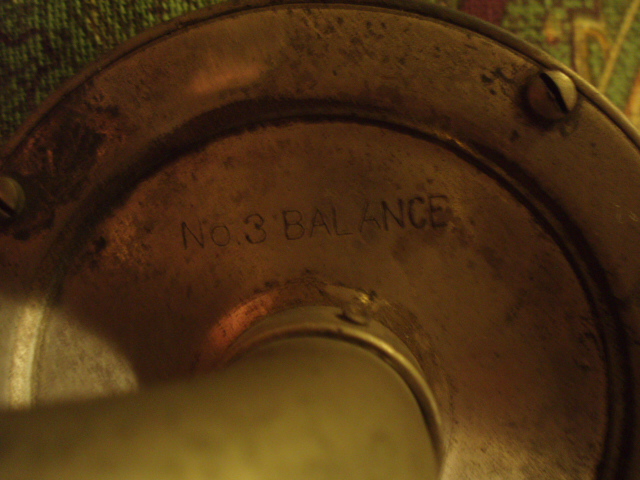
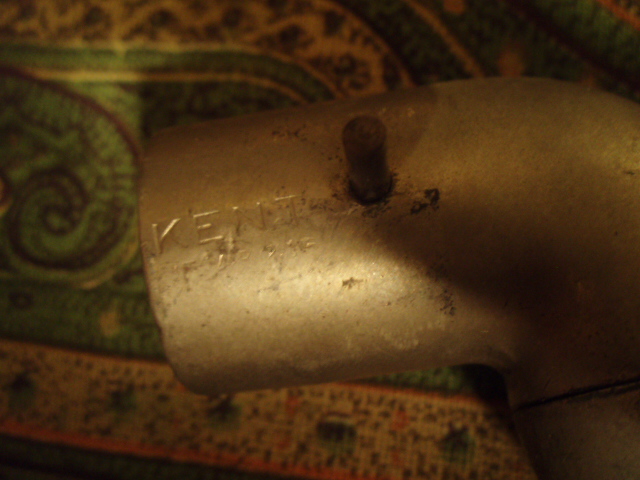
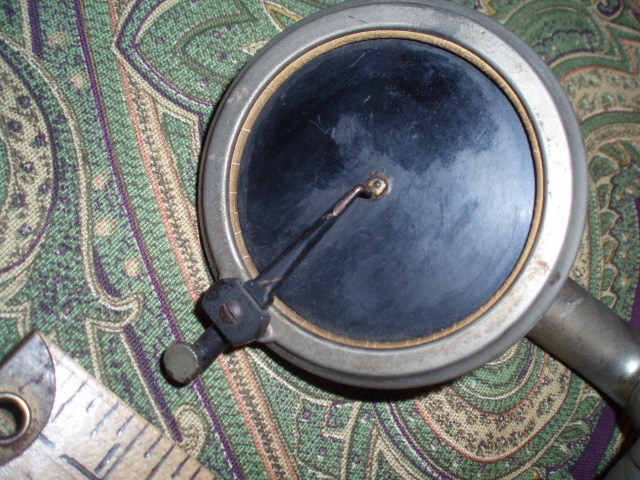
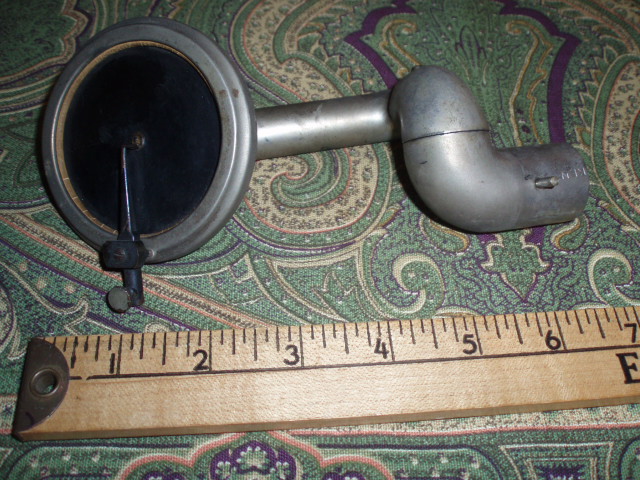
Here is the needle cut reproducer. It is a "Kent" No 3 Balance.
- Attachments
-
- 001 ultimate ML 171.jpg (163.76 KiB) Viewed 1465 times
-
- 001 ultimate ML 169.jpg (151.51 KiB) Viewed 1465 times
-
- 001 ultimate ML 168.jpg (141.88 KiB) Viewed 1465 times
-
- 001 ultimate ML 167.jpg (143.47 KiB) Viewed 1465 times
-
Joe_DS
- Forum Moderator
- Posts: 1056
- Joined: Thu Jun 08, 2006 4:23 pm
- Location: San Francisco, California, USA
That's a nice sound box, and it should perform very well once the hardened gaskets are replaced.
The function of the gaskets was to isolate the diaphragm from the sound box casing, but it also gave the diaphragm some flexibility, allowing it to plunge, to a certain extent, as the needle & needle bar moved back and forth while tracking the record's groove.
The way it is now, only the very center of the diaphragm can respond to the movement of the needle bar. This produces a higher pitched tone than the sound box would have had originally. But more important, it also restricts the movement of the needle-bar and stylus, forcing the needle to ride the center of the groove, and scrape away the sides. Best to have these gaskets replaced ASAP. You'll be amazed at the difference once you do.
This, by the way, is very different from the Orthophonic sound box, in which the actual movement of the diaphragm is NOT dependent on the softness of the gaskets. Quite the opposite. The gaskets were designed to rigidly clamp the edge of the diaphragm, while isolating it from the sound box's shell. (All of the original Orthophonic gaskets I've seen have been paper backed rubber, and the rubber was still in good condition!)
The ability of the Orthophonic diaphragm to move back and forth is due to the corrugated ring on the diaphragm's outer edge. (If you insert a needle into a good condition Orthophonic sound box, and tighten the thumbscrew, you can actually see the diaphragm plunge at the point of the corrugated ring.) Any restriction placed on the movement of the needle bar is normally due to frozen or out of alignment ball bearings, which is why that's a good place for a (non professional) re-builder to start.
JDS
The function of the gaskets was to isolate the diaphragm from the sound box casing, but it also gave the diaphragm some flexibility, allowing it to plunge, to a certain extent, as the needle & needle bar moved back and forth while tracking the record's groove.
The way it is now, only the very center of the diaphragm can respond to the movement of the needle bar. This produces a higher pitched tone than the sound box would have had originally. But more important, it also restricts the movement of the needle-bar and stylus, forcing the needle to ride the center of the groove, and scrape away the sides. Best to have these gaskets replaced ASAP. You'll be amazed at the difference once you do.
This, by the way, is very different from the Orthophonic sound box, in which the actual movement of the diaphragm is NOT dependent on the softness of the gaskets. Quite the opposite. The gaskets were designed to rigidly clamp the edge of the diaphragm, while isolating it from the sound box's shell. (All of the original Orthophonic gaskets I've seen have been paper backed rubber, and the rubber was still in good condition!)
The ability of the Orthophonic diaphragm to move back and forth is due to the corrugated ring on the diaphragm's outer edge. (If you insert a needle into a good condition Orthophonic sound box, and tighten the thumbscrew, you can actually see the diaphragm plunge at the point of the corrugated ring.) Any restriction placed on the movement of the needle bar is normally due to frozen or out of alignment ball bearings, which is why that's a good place for a (non professional) re-builder to start.
JDS
-
Repeal18th
Topic author - Junior Member
- Posts: 18
- Joined: Fri Jan 01, 2010 12:58 am
JDS-
What is the best source for gasket material? I believe the CTM said that insulation from small gage electric wire is servicable or would I be better served getting the material from a antique phono repair supply vendor?
Thanks as always.
Do you attend the Danbury Conn show? I have that penciled in to my August 2010 calendar.
Ed
What is the best source for gasket material? I believe the CTM said that insulation from small gage electric wire is servicable or would I be better served getting the material from a antique phono repair supply vendor?
Thanks as always.
Do you attend the Danbury Conn show? I have that penciled in to my August 2010 calendar.
Ed
-
Joe_DS
- Forum Moderator
- Posts: 1056
- Joined: Thu Jun 08, 2006 4:23 pm
- Location: San Francisco, California, USA
The rubber gaskets you need would be about as soft--or softer than--a rubber binder. (Don't use a rubber binder though, since they dry out in months.)
There are a number of phonograph parts suppliers that sell special gaskets for sound boxes --
http://www.antiquephono.com/
http://www.victroladoctor.com/
http://www.victrolarepairservice.com/
http://www.phonographs.org/store/
Many more on this page, under accessories/restoration -- http://www.proaxis.com/~settlet/record/links.html
Normally, sound box gaskets come in strips. (For instance: http://www.phonographs.org/store/produc ... v5gs7c01f3 ) When you order them, be sure to specify the diameter of the diaphragm.
Looking over the photo of your sound box, with my screen set to a higher resolution, I can see that it does not have a conventional mica diaphragm. It looks more like celluloid. That should still be fine as long as there are no stress cracks running through it. If it is cracked, you can probably find a good quality mica diaphragm at one of the above shops that will fit.
---------------------------------------
I've never been to the Danbury show, but have heard it's a blast. I'm on the other side of the country, and don't travel much out of my area.
JDS
There are a number of phonograph parts suppliers that sell special gaskets for sound boxes --
http://www.antiquephono.com/
http://www.victroladoctor.com/
http://www.victrolarepairservice.com/
http://www.phonographs.org/store/
Many more on this page, under accessories/restoration -- http://www.proaxis.com/~settlet/record/links.html
Normally, sound box gaskets come in strips. (For instance: http://www.phonographs.org/store/produc ... v5gs7c01f3 ) When you order them, be sure to specify the diameter of the diaphragm.
Looking over the photo of your sound box, with my screen set to a higher resolution, I can see that it does not have a conventional mica diaphragm. It looks more like celluloid. That should still be fine as long as there are no stress cracks running through it. If it is cracked, you can probably find a good quality mica diaphragm at one of the above shops that will fit.
---------------------------------------
I've never been to the Danbury show, but have heard it's a blast. I'm on the other side of the country, and don't travel much out of my area.
JDS
-
 Record-changer
- Senior Member
- Posts: 1139
- Joined: Fri Apr 21, 2006 8:11 pm
- Location: Bloomington IN USA
You need to be using records made before 1932.
Most records made after that were made for electric reproducers, and were made of softer shellac for better sound. But they wear faster on acoustic players.
The records from the World War II era were made of recycled shellac, and are even easier to wear. The shellac had ground-up bits of old record labels and other stuff in it. And many of those records have a good shellac surface laminated on a filler material (often containing cardboard, asphalt, hide glue, and/or sawdust).
Most records made after that were made for electric reproducers, and were made of softer shellac for better sound. But they wear faster on acoustic players.
The records from the World War II era were made of recycled shellac, and are even easier to wear. The shellac had ground-up bits of old record labels and other stuff in it. And many of those records have a good shellac surface laminated on a filler material (often containing cardboard, asphalt, hide glue, and/or sawdust).
-
Repeal18th
Topic author - Junior Member
- Posts: 18
- Joined: Fri Jan 01, 2010 12:58 am
I think the post 1932 record issue is at least part of the problem. I looked up one of the records I was having issues with and found out it was from 1941, a okeh country recording.
Thanks for your help.
Ed
Thanks for your help.
Ed
Who is online
Users browsing this forum: No registered users and 2 guests
It is currently Thu Oct 06, 2016 12:11 pm