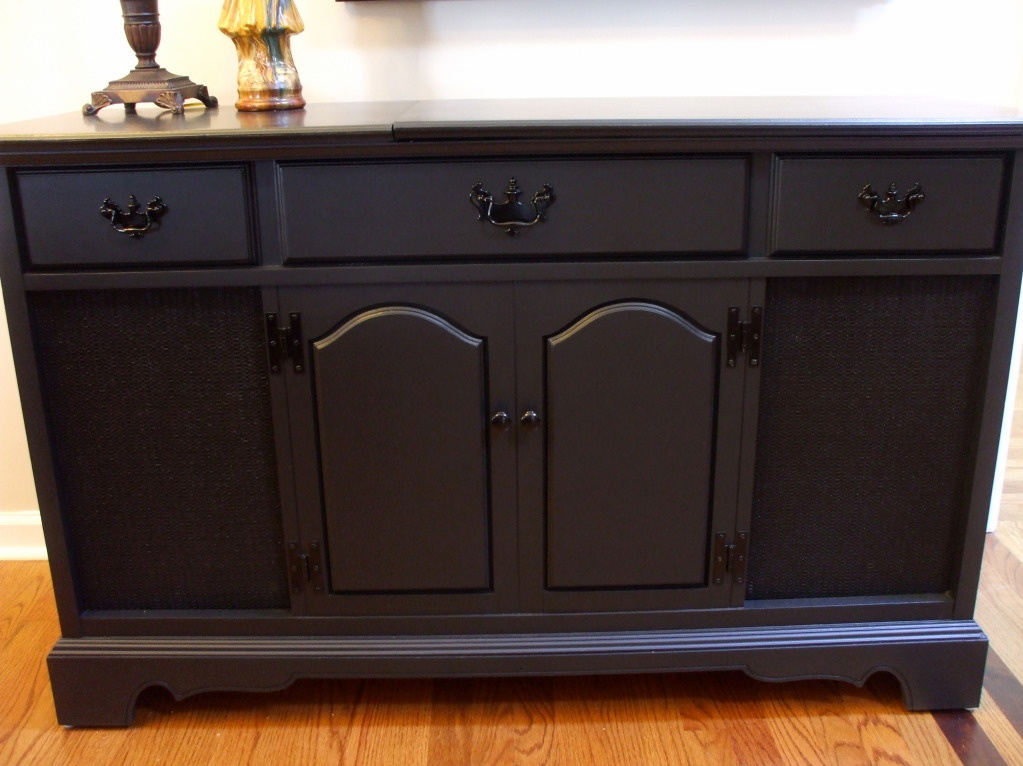
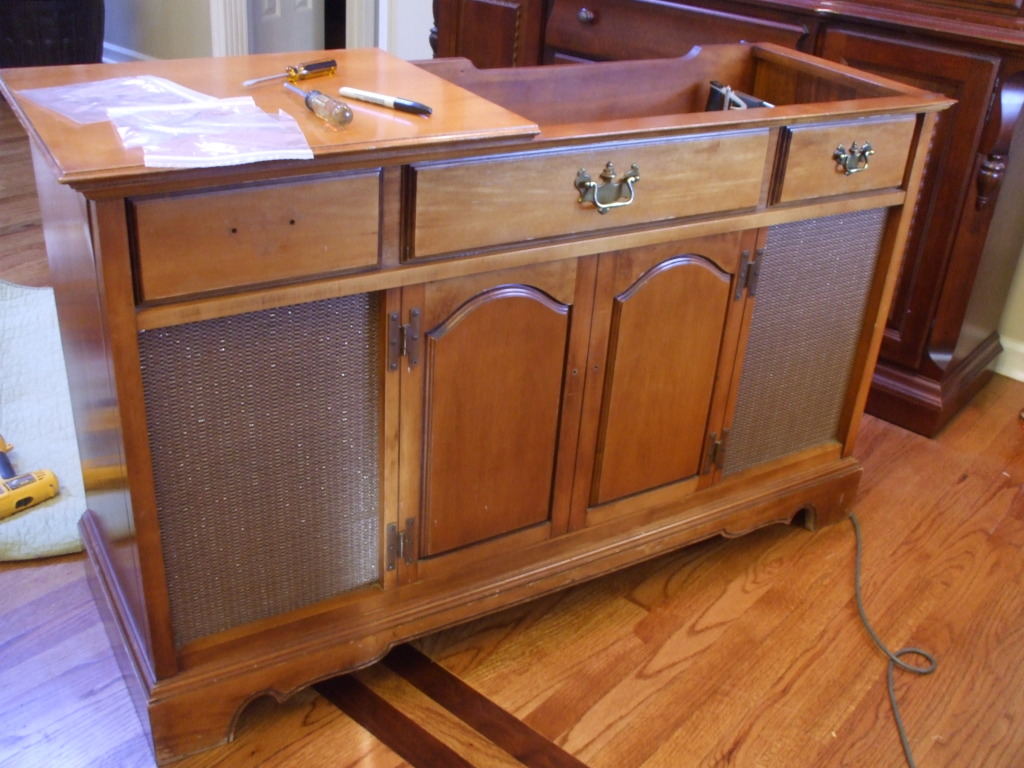
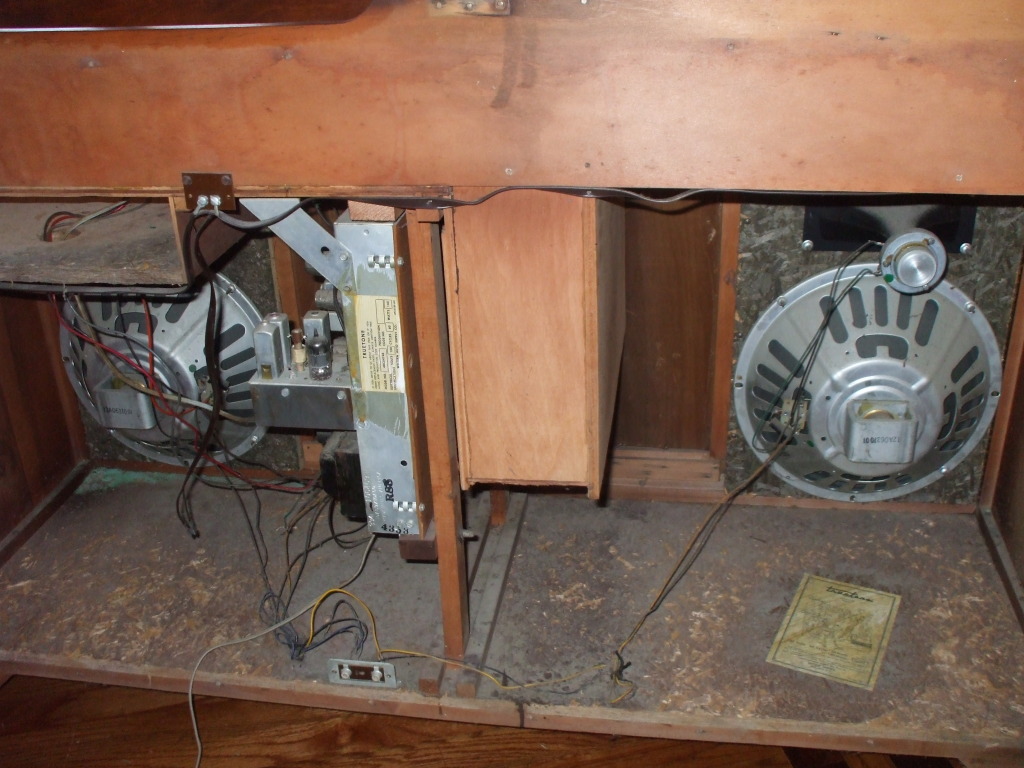
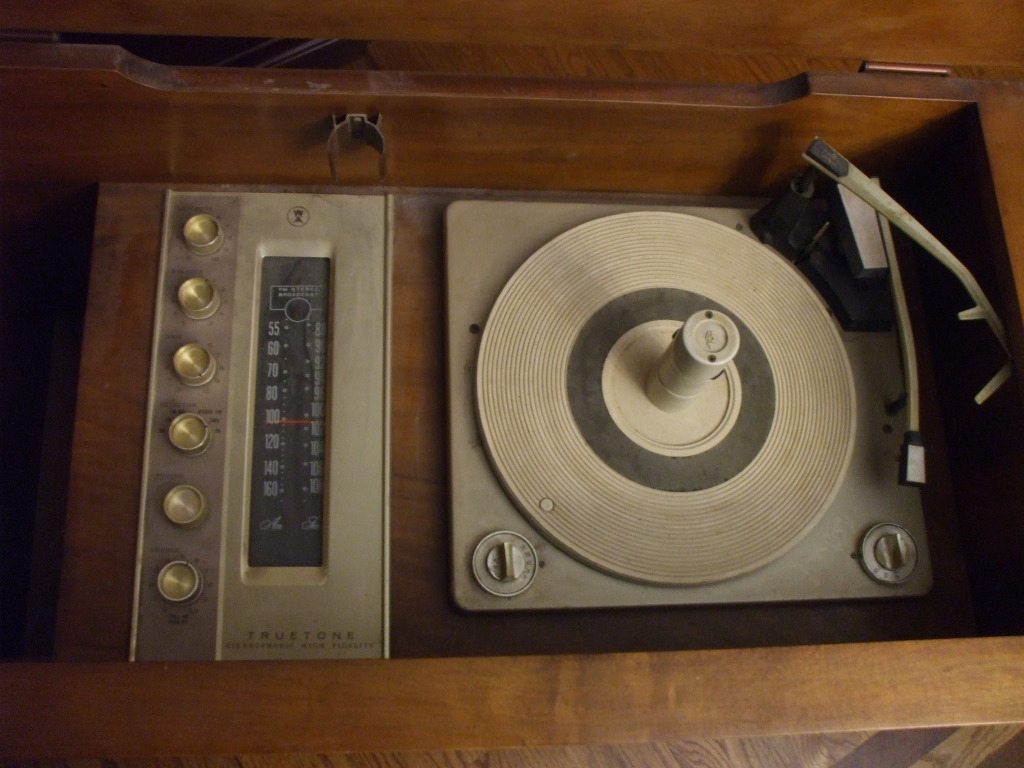
I want to thank Matt and Ron again for all their help with my true tone console you guys were awesome. I want to tell you how I got this piece and why I think it is so cool. I lost my job building autos for GM in 09 at the Saturn plant and started refinishing and selling used furniture anything made of wood..dressers,chest,china cabinets ect,ect. and we came across a deal on CL were a family was leaving TN. and moving to the Dakota's any ways they had 3 dressers 1antique vanity and the true tone console and we bought them all, the owner said the console was his uncles and when he passed it was offered to the family and thats how he ended up with it and he played it a little bit and really kept it because he did'nt want to see it hauled to the dump he remembered his uncle liked to play it any ways it was dirty and neglected when I got it and I'll post before pic's at the bottom but I have installed a new needle/refinished the cabinet and polished/detailed every thing I was comfortable messing with, now I would like to fix all the electrical probs. with the console. I have no electrical exp. at all but I really want to learn and I love old audio equipment and have bought some stereo's to start with. What do I need to buy? are there DVD's to watch or any books you would think would help for a Novice? The problems I want to fix with the true tone are left channel won't play as loud as the right and that's the same problem with the other stereo's I have...how do I fix that?...where do I start? also the FM Stereo light won't light up it's a looks like a old auto fuse I would like to fix that. any help would be apperciated.
Thanks, Doug

I want to learn vintage electronics repair/restoration
The lounge where a collector can relax. For topics that don't fit into the forums.
- Attachments
-
- DSCF5527.jpg (229.15 KiB) Viewed 12450 times
-
- DSCF5313.jpg (213.24 KiB) Viewed 12450 times
-
- DSCF5319.jpg (213.79 KiB) Viewed 12450 times
-
- DSCF5306.jpg (178.69 KiB) Viewed 12450 times
-
Ron Rich
- Forum Moderator
- Posts: 8193
- Joined: Sun May 06, 2007 11:31 pm
- Location: Millbrae (San Francisco area)CA, USA
Deash,
I do not know where to start--I can only tell you that I went to a school, way back when, that "specialized" in electronics----then spent many years, working on jukeboxes, re-learning what I have now mostly forgotten--I ain't too bright ! But I do have a great memory--it's just not very long-- Ron Rich
I do not know where to start--I can only tell you that I went to a school, way back when, that "specialized" in electronics----then spent many years, working on jukeboxes, re-learning what I have now mostly forgotten--I ain't too bright ! But I do have a great memory--it's just not very long-- Ron Rich
-
Bobby Basham
- Senior Member
- Posts: 498
- Joined: Sat Aug 26, 2006 2:50 pm
- Location: Tucson, Arizona, USA
I feel like Ron, and feel rather speechless (yeah, right). Your cabinet restoration is absolutely gorgeous, you really know your way around some wood. Your unit looks alot like the Montgomery Ward console that I had, except mine had the side-firing woofers like the Maggies and also had the same metal chassis. I thought it was a Maggie amp when I first removed the back panel.
Electronic Issues? There is so much to learn. I think it helps to know how semi-conductors work and what role they play in the scheme of things. Capacitors, transistors, resistors, tubes, diodes, bias adjustments...the list goes on.
Speaking for myself, I had to break it down to the component level...Read up on how each part worked in conjunction with others, how they prevented unwanted DC voltages in certain sections of an amp to keep from frying a transformer and damaging speakers, etc. You wouldn't want to put a fresh, new battery in a car that still has a bad Alternator, Generator or Voltage Regulator, so some detective work is in order.
Just like that silly song..."The hip bone's connected to the knee bone, the knee bone's connected to the blah..blah..blah.
Capacitors, fuses and tubes are labeled with their values, resistors are color-coded, transistors and diodes should have some very small numbers printed on them. Those numbers can be cross-referenced for suitable replacements.
Getting a schematic for the amp/receiver also helps. Even though most semiconductors are labeled, it helps to know what voltages/tolerances are acceptable. I tweaked an amp's controls (unlabeled), thinking that they were volume/gain controls when in fact, they were for bias. The amp was hot to the touch, enough to cause a blister on your finger. I only ran it for a few seconds before I realized what was going on. This was a 70's unit, and none of my older Maggies had a bias adjustment, so getting a schematic saved the day.
I would advise checking out all the old posts. There is a wealth of info there, including what precautions to take. Learning how to use a soldering/desoldering gun, signal tracer, multi-meter and scope (for the real serious folks) are essential. A signal tracer can help you find that "weak link" in the audio chain. There are also books out there on how to repair Electronics without a schematic...I think I have two volumes back in my workroom.
I'm not encouraging you to get in there and get electrocuted, fry the unit and burn down the house, but doing alot of reading to get a feel on how these things (a basic amp/receiver) work. Some folks like to snuggle up on a couch close to a fireplace reading a classic novel, but given a dry manual/schematic and a shot of Brandy anyday, and I'm a happy camper snuggled up, too...LOL!
Once again, I am not a certified/licensed Tech. Just an amateur who's managed to work around the audio obstacles that I have encountered over the years. There are plenty of techs and other experienced folks here at your disposal who can help walk you through your issues. We all had to start somewhere even before the formal training.
If you're leary about doing it yourself, but can afford it, then by all means, take, send, ship it to a qualified/professional individual who knows what (s)he's doing. --BB
Bobby Basham
Tucson, Arizona (rwbasham@yahoo.com)
Electronic Issues? There is so much to learn. I think it helps to know how semi-conductors work and what role they play in the scheme of things. Capacitors, transistors, resistors, tubes, diodes, bias adjustments...the list goes on.
Speaking for myself, I had to break it down to the component level...Read up on how each part worked in conjunction with others, how they prevented unwanted DC voltages in certain sections of an amp to keep from frying a transformer and damaging speakers, etc. You wouldn't want to put a fresh, new battery in a car that still has a bad Alternator, Generator or Voltage Regulator, so some detective work is in order.
Just like that silly song..."The hip bone's connected to the knee bone, the knee bone's connected to the blah..blah..blah.
Capacitors, fuses and tubes are labeled with their values, resistors are color-coded, transistors and diodes should have some very small numbers printed on them. Those numbers can be cross-referenced for suitable replacements.
Getting a schematic for the amp/receiver also helps. Even though most semiconductors are labeled, it helps to know what voltages/tolerances are acceptable. I tweaked an amp's controls (unlabeled), thinking that they were volume/gain controls when in fact, they were for bias.
The amp was hot to the touch, enough to cause a blister on your finger. I only ran it for a few seconds before I realized what was going on. This was a 70's unit, and none of my older Maggies had a bias adjustment, so getting a schematic saved the day.I would advise checking out all the old posts. There is a wealth of info there, including what precautions to take. Learning how to use a soldering/desoldering gun, signal tracer, multi-meter and scope (for the real serious folks) are essential. A signal tracer can help you find that "weak link" in the audio chain. There are also books out there on how to repair Electronics without a schematic...I think I have two volumes back in my workroom.
I'm not encouraging you to get in there and get electrocuted, fry the unit and burn down the house, but doing alot of reading to get a feel on how these things (a basic amp/receiver) work. Some folks like to snuggle up on a couch close to a fireplace reading a classic novel, but given a dry manual/schematic and a shot of Brandy anyday, and I'm a happy camper snuggled up, too...LOL!
Once again, I am not a certified/licensed Tech. Just an amateur who's managed to work around the audio obstacles that I have encountered over the years. There are plenty of techs and other experienced folks here at your disposal who can help walk you through your issues. We all had to start somewhere even before the formal training.
If you're leary about doing it yourself, but can afford it, then by all means, take, send, ship it to a qualified/professional individual who knows what (s)he's doing. --BB
Bobby Basham
Tucson, Arizona (rwbasham@yahoo.com)
-
shedradios
- Senior Member
- Posts: 126
- Joined: Sat Jul 08, 2006 8:51 am
I don't want to put a damper on your desire to learn electronic repair and whatever "restoration" means to you Doug. But a few things I recommend. Don't do your cabinets until you firmly know the electronic stuff can be restored/fixed. Also, even some cabinet parts may be hard to come by. If these "consoles" really had any collector interest, how you gonna pass off the chocolate painted one? A collector generally can accept electronic changes but outside appearances they don't like changes. Space is a real problem for folks (unless you are like Bobby) and even you will end up with these repaired/restored stacked up in you garage wondering where you went wrong. I know it's a little over the top but you need to do a market analysis. Unless you live in and/or around a hotbed of stereo/record enthusiasts you won't find too many people willing to pay much. You would be lucky to get the money you have in it much less cover your time. Done right most all take more time and money than they are worth. And it's not going to change for some time.
On the subject of learning electronic repair. Search the web for schools. Check your local area. No luck? Well buy books that reflect your interest, lots of books. Buy the old NRI lessons when you can or other shut down radio school books. Look for the on-line ready-to-read books. Study and study. Use some of them old radios and consoles to experiment on. That's what most of the "radio repair experts" are doing now. If they can't understand the problem or get a specific answer to fix their radio, it becomes a parts set. That's about it.
On the subject of learning electronic repair. Search the web for schools. Check your local area. No luck? Well buy books that reflect your interest, lots of books. Buy the old NRI lessons when you can or other shut down radio school books. Look for the on-line ready-to-read books. Study and study. Use some of them old radios and consoles to experiment on. That's what most of the "radio repair experts" are doing now. If they can't understand the problem or get a specific answer to fix their radio, it becomes a parts set. That's about it.
Bobby, Thanks for the advice...that's just what I needed a general direction to start walking in. I will read all the older post on this site and hit books-a-million to see what they have on the subject. I really enjoy my True Tone Console and want it to be 100% any one that listens to it loves it and can tell the right side is louder than the left really want to fix that soon.
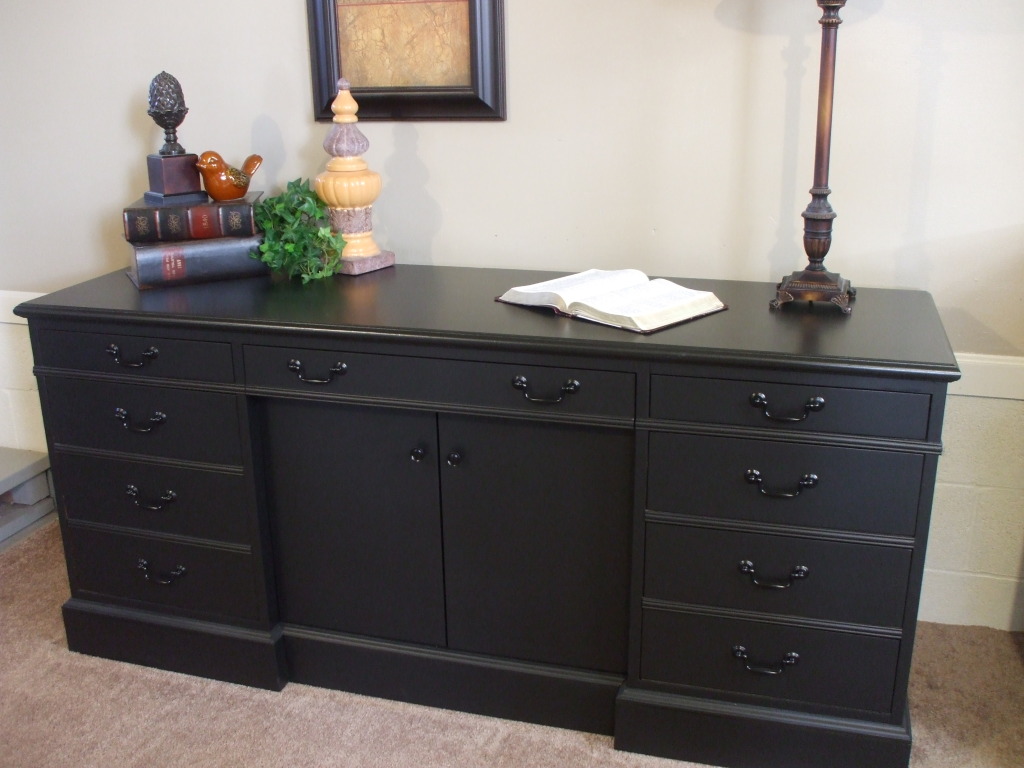
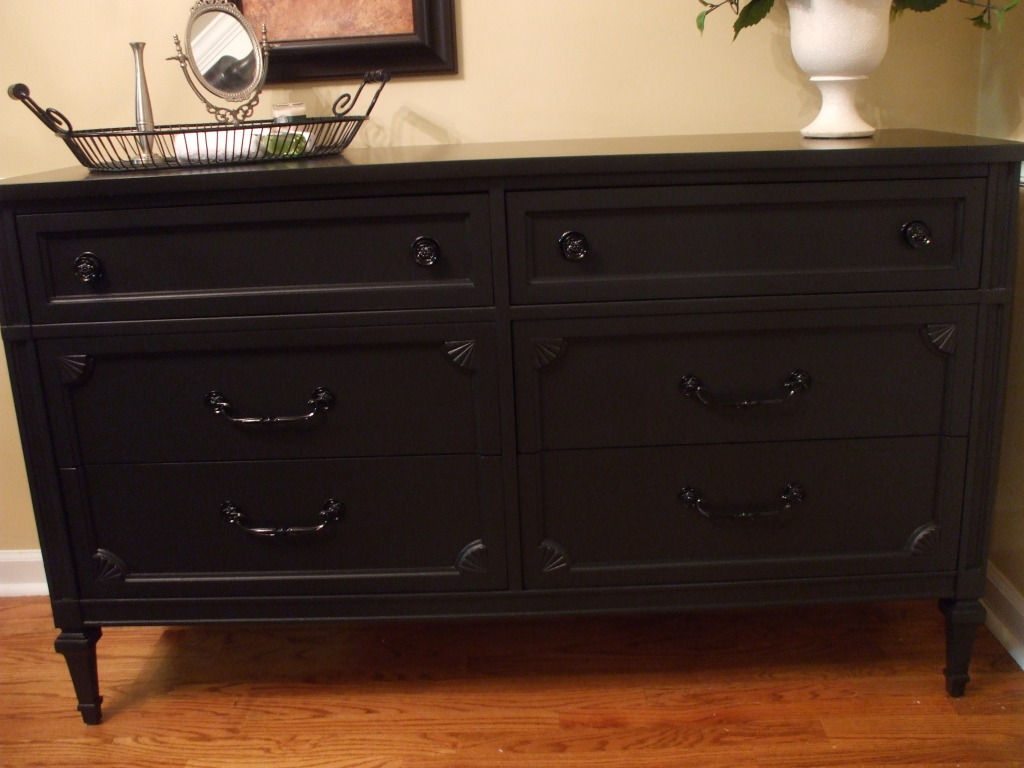
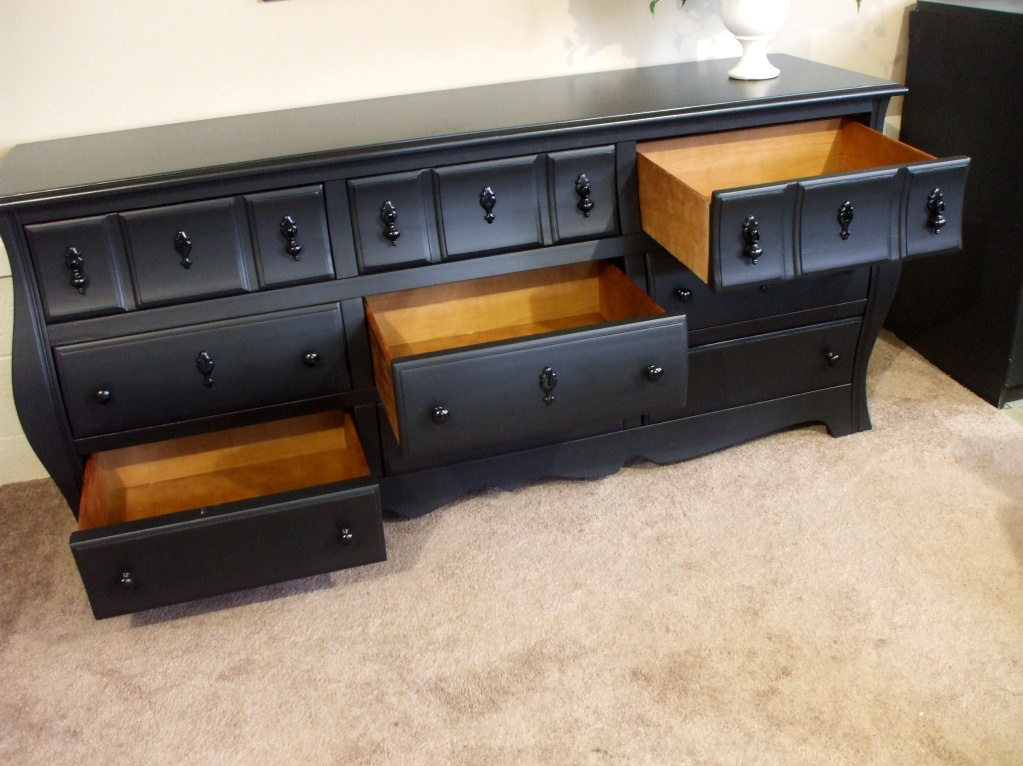
Thanks for the compliments on the cabinet, we sell a lot of dressers and chest of drawers with that Satin Black/Gloss Black look.
I going to start by buying a soldering gun and learn how to solder/unsolder...I watched a few video's on you tube today about how to correctly solder/unsolder and that was informative.
I'm hoping I'll find someone in the area that would be willing to show me how to rebuild/restore/make safe my first tube amp, I'm a half an hour from Nashville/Music City, maybe I could barter some cabinet refinishing with them....need to hit google and look for vintage electronics in Nashville.
Thanks for the compliments on the cabinet, we sell a lot of dressers and chest of drawers with that Satin Black/Gloss Black look.
I going to start by buying a soldering gun and learn how to solder/unsolder...I watched a few video's on you tube today about how to correctly solder/unsolder and that was informative.
I'm hoping I'll find someone in the area that would be willing to show me how to rebuild/restore/make safe my first tube amp, I'm a half an hour from Nashville/Music City, maybe I could barter some cabinet refinishing with them....need to hit google and look for vintage electronics in Nashville.
Shedradios, read what you said and good advice, the Westinghouse hi-fi I bought for $10 is something I don't know that can be fixed and I have the cabinet done and will post pic's I think it looks great , but if it can't be fixed at a resonable amount of $$ it's becomes worthless..well maybe I can convince someone it's a night stand.
My idea of restored is everything functions, like all lamps light and all controls do what they say they do and is safe enough to be used daily and looks great even if it's no longer factory original.
I feel I do live in a hot bed of stereo/vinyl/vintage tube audio gear enthusiats, I live 30 miles south of Nashville and sell used refinished furniture on Craigs List out of our home and have had many people ask if my black True Tone console was for sale they love it as much as we do, so that makes me think that it could be profitable...I understand what you said about collectors wanting original looking players, but there is a hole group of people that would love to have a console stereo with a contempary finish to match their current furniture...in the year 2011 not a lot of people want a 50 year old french provincal console stereo in a pecan finish...we sell a bunch of black furniture every week I'll post a couple of pic's to show you what I'm talking about.
I've asked people that liked our console if they thought $ 300.00 was to much to ask if I was willing to sell it and they said that was cheap and would be willing to buy it, but again it's 48 years old and I'm not sure how safe it would be if it was left on all day ? I paid very very little for it and have $14.00 for a new needle and maybe $10.00 into refinishing supplies, so that's got me thinking and wanting to try to do it, and besides I love old stereo's, both sets of grandparents had console stereo's when I was a kid and bugged them all the time to let me play them and go though their record collections...loved doing that.
My idea of restored is everything functions, like all lamps light and all controls do what they say they do and is safe enough to be used daily and looks great even if it's no longer factory original.
I feel I do live in a hot bed of stereo/vinyl/vintage tube audio gear enthusiats, I live 30 miles south of Nashville and sell used refinished furniture on Craigs List out of our home and have had many people ask if my black True Tone console was for sale they love it as much as we do, so that makes me think that it could be profitable...I understand what you said about collectors wanting original looking players, but there is a hole group of people that would love to have a console stereo with a contempary finish to match their current furniture...in the year 2011 not a lot of people want a 50 year old french provincal console stereo in a pecan finish...we sell a bunch of black furniture every week I'll post a couple of pic's to show you what I'm talking about.
I've asked people that liked our console if they thought $ 300.00 was to much to ask if I was willing to sell it and they said that was cheap and would be willing to buy it, but again it's 48 years old and I'm not sure how safe it would be if it was left on all day ? I paid very very little for it and have $14.00 for a new needle and maybe $10.00 into refinishing supplies, so that's got me thinking and wanting to try to do it, and besides I love old stereo's, both sets of grandparents had console stereo's when I was a kid and bugged them all the time to let me play them and go though their record collections...loved doing that.
- Attachments
-
- DSCF5696.jpg (155.38 KiB) Viewed 12413 times
-
- DSCF5433.jpg (155.81 KiB) Viewed 12413 times
-
- DSCF5519.jpg (273.74 KiB) Viewed 12413 times
-
71stereotheatre
- Regular Member
- Posts: 27
- Joined: Thu Mar 17, 2011 10:07 pm
- Location: Port St. Lucie, Florida
I like the look of the satin black on the Truetone console, it's interesting on the Early American design, and looks professional. I'm not really into the current trends in furniture design or finishes either.
In spite of the console stereos being a drag on the market, I still love all of mine, I always thought you had arrived when you got a console set, and I actually like components. I think we should all be allowed to enjoy these things for what they are, instead of what a bunch of high end mindsets dictate. In other words, whatever does it for you, in whichever format.
In spite of the console stereos being a drag on the market, I still love all of mine, I always thought you had arrived when you got a console set, and I actually like components. I think we should all be allowed to enjoy these things for what they are, instead of what a bunch of high end mindsets dictate. In other words, whatever does it for you, in whichever format.
-
Bobby Basham
- Senior Member
- Posts: 498
- Joined: Sat Aug 26, 2006 2:50 pm
- Location: Tucson, Arizona, USA
Ya know,
I had to read my post several times, thinking that it was inappropriate and misguiding someone new to electronic restoration/repair, and probably should have deleted it.
But, rethinking things, it kinda reminds me of mathematics...addition, subtraction, multiplication, division....then progressing further into Algebra, Trig etc. You gotta start somewhere. Everything does not require a Tech for repairs. Don't charge me $50 bucks to replace a $5.00 needle.
I think that deash can learn, being that he's so meticulous about his other restorations. Cabinet restoration is NOT easy. I'll gladly work with the guts of a beast anyday before tackling a cabinet. I applaud you again, deash, for your cabinet work.
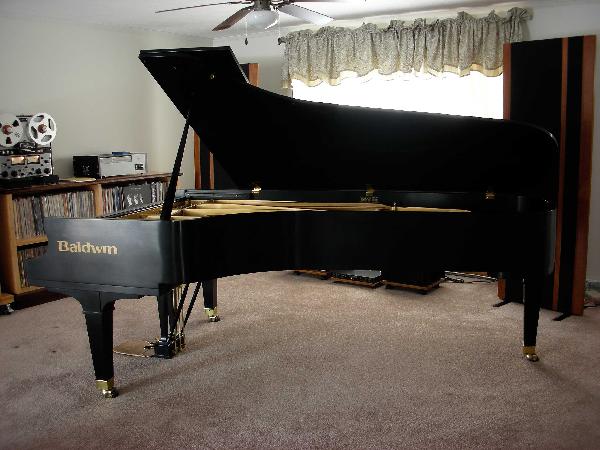
As far as Black Satin goes, my 9-ft Baldwin Concert Artist grand, weighing in at 1,400 pounds, has a black satin finish. Something about a big, shiny, ebony finish on a concert grand looks kinda cheap. But I think it looks great on smaller models, though, and doesn't stick out like a thore thumb.
I think most of you know me by now, my post is not meant to bash any Techs up in the camp. We NEED you guys (and gals, if any). You bring to the room alot of issues that are overlooked many times over. I admit, there were many issues that were staring me right in the face, and couldn't see the forest for the trees...DUH! --BB
Bobby Basham
Tucson, Arizona
I had to read my post several times, thinking that it was inappropriate and misguiding someone new to electronic restoration/repair, and probably should have deleted it.
But, rethinking things, it kinda reminds me of mathematics...addition, subtraction, multiplication, division....then progressing further into Algebra, Trig etc. You gotta start somewhere. Everything does not require a Tech for repairs. Don't charge me $50 bucks to replace a $5.00 needle.
I think that deash can learn, being that he's so meticulous about his other restorations. Cabinet restoration is NOT easy. I'll gladly work with the guts of a beast anyday before tackling a cabinet. I applaud you again, deash, for your cabinet work.
As far as Black Satin goes, my 9-ft Baldwin Concert Artist grand, weighing in at 1,400 pounds, has a black satin finish. Something about a big, shiny, ebony finish on a concert grand looks kinda cheap. But I think it looks great on smaller models, though, and doesn't stick out like a thore thumb.
I think most of you know me by now, my post is not meant to bash any Techs up in the camp. We NEED you guys (and gals, if any). You bring to the room alot of issues that are overlooked many times over. I admit, there were many issues that were staring me right in the face, and couldn't see the forest for the trees...DUH! --BB
Bobby Basham
Tucson, Arizona
- Attachments
-
- Baldwin Concert Grand.jpg (45.31 KiB) Viewed 12384 times
Last edited by Bobby Basham on Thu Apr 14, 2011 2:25 am, edited 3 times in total.
Bobby, Awesome piano....yea, Why can't I learn to repair these great old stereo's....I was'nt born with the knowledge of cabinet restoration, I learned it over time...a little at a time and made some mistakes and learned from them and I'm still making mistakes and learning.
I would love to find some one in the midd-tenn area that would get me started like what equip. do I need to get started. any great books for the absolute beginner?
I would love to find some one in the midd-tenn area that would get me started like what equip. do I need to get started. any great books for the absolute beginner?
That is some really good refinishing deash! What paint/stain do you use? Did you sand the console down? I just picked up a beat up Victrola Solid State console that needs alot of refinishing. 
Yes, I sanded the cabinet and painted it with Glidden Onyx Black Satin sheen acrylic latex paint and the cabinet top has 4 coats of Minwax satin finish water based polyurethane that gets block sanded out with 220 sand paper between coats...all metal hardware is first cleaned with an SOS pad to get all furniture polish/hand lotion off and then shot with enamel primer and the gloss black enamel and then clear enamel.
-
Bobby Basham
- Senior Member
- Posts: 498
- Joined: Sat Aug 26, 2006 2:50 pm
- Location: Tucson, Arizona, USA
I've actually cheated by using a few coats of polyurathane on a few of my cabinets, using #0000 steel wool between coats. The cabinets weren't weren't badly scratched/marked, but they seemed to be rather dull even after cleaning them with some Murphy's Oil Soap.
Deash, your furniture restoration is awesome! --BB
Bobby Basham
Tucson, Arizona
Deash, your furniture restoration is awesome! --BB
Bobby Basham
Tucson, Arizona
Dear Deash--"the hunger for knowledge---". I strongly agree w/ the posts you've read. But, schematics are a definate neccessity. Problem is can you read them? I might suggest libraries or old / used book stores for some old Audel's "Basic electronics" and the like. Radio Shack may still have some books available that'll teach you about electronic devices such as capacitors, semiconductors, ect. And they're still great for hobby kits one can build. My dad was a process engineer when RCA was the Victor Talking Machine Company. His last project was the Saturn Missle Guidance System---so, my 1st Radio was a "cat's whisker" crystal , one station & one earphone---no electric source was necessary! I've been soldering for 60 years and I use a "scope". So, today it might take you a few months-maybe a year or more to "catch up" a bit. Since more folks are killed by 110 VAC household current, definately learn to respect electricity 1st thing. Even with my experience, I got careless on night on a 1935 Philco Radio and vaporized a screwdriver by grazing a 450 volt capacitor. Was like arc-welding without a helmet! It's like working w/ snakes---RESPECT! I still do old jukeboxes, so I respect your cabinet work. It's a shame you're far away 'cause I'm giving away some 50's & 60's combination radio-phono console sets, 4 or 5. Audio-visual is just a hobby for me and I've plenty of on-going projects. I wish you much luck in your endeavor. Dudge.
Dear Dudge, Thanks for the encouragement and complements on the cabinets. I have found a wealth of info on reading schematics for the novice and quickly
learned how to read the Sams photofact I purchased for my console. I also quickly learned to check and double check the routing of multiple leads going to a single terminal against the schematics before turning on the power. I had a 4.5 ohm dog bone resistor glowing cherry red in seconds...I was all done being in
a hurry after that. I read a lot of things on the internet that helped keep me safe like putting the plastic knobs on the amp pot.shafts and only touching the knobs with one hand and keeping the other had away from the amp and not becoming the ground, anyways I plan on posting my experience fixing my console
soon with photos. Many new people show up at this site wanting to repair their lastest purchase only to hear DON'T TOUCH IT, LEAVE IT ALONE, YOU'LL KILL YOURSELF better take it to a pro tech and I have found that is good and solid advice, but if you just really want to do it yourself I think you have to do just that.
learned how to read the Sams photofact I purchased for my console. I also quickly learned to check and double check the routing of multiple leads going to a single terminal against the schematics before turning on the power. I had a 4.5 ohm dog bone resistor glowing cherry red in seconds...I was all done being in
a hurry after that. I read a lot of things on the internet that helped keep me safe like putting the plastic knobs on the amp pot.shafts and only touching the knobs with one hand and keeping the other had away from the amp and not becoming the ground, anyways I plan on posting my experience fixing my console
soon with photos. Many new people show up at this site wanting to repair their lastest purchase only to hear DON'T TOUCH IT, LEAVE IT ALONE, YOU'LL KILL YOURSELF better take it to a pro tech and I have found that is good and solid advice, but if you just really want to do it yourself I think you have to do just that.
-
 DoghouseRiley
- Senior Member
- Posts: 630
- Joined: Thu Apr 16, 2009 9:48 pm
- Location: North-West England
This is a subject you can't even learn at evening classes in this country. It's sadly a dying skill.
We're in an age of "plug and play," most service "engineers" who service TV and audio equipment are just "board changers," few will have so much as a soldering iron in their tool bag.
Digressing.
Over forty years ago in my twenties as my first foray into retail management, I ran a TV/Radio (sales and rental) and Electrical appliance retail shop.
My TV engineer, (we still swap Christmas cards, though he and his wife live 200 miles away) was about the same age as me and was brilliant at the job (he'd studied it at night school). He could often fix some sets without a service diagram, as like jukeboxes it was often failed resistors or capacitors that he could trace.
But he knew all the common foibles of most of the makes of TV, though of course they weren't anything like as complicated as a jukebox, but there were many brands and models of TV.
He used to have a bit of fun with some customers, if the fault they described was a common one on a particular model, i.e, like a rolling picture, having been told the fault, he'd open the back and swap say, a PCL82 valve. He'd close up the back and make as if to leave.
The customer would say "Aren't you going to turn it on and check it?"
He'd reply, "It isn't necessary but if you insist..." Of course the TV would be found to be now working fine.
But on one occasion when he went through this act, he noticed the picture had a partial frame collapse, when he turned it on after changing a valve.
"I'll fix that for you."
"Fix what?"
"That big gap you've got at the top and bottom of the screen"
"Oh? I thought that was how it was supposed to be like."
Strangely enough, on older TVs that is how it appears today.
We're in an age of "plug and play," most service "engineers" who service TV and audio equipment are just "board changers," few will have so much as a soldering iron in their tool bag.
Digressing.
Over forty years ago in my twenties as my first foray into retail management, I ran a TV/Radio (sales and rental) and Electrical appliance retail shop.
My TV engineer, (we still swap Christmas cards, though he and his wife live 200 miles away) was about the same age as me and was brilliant at the job (he'd studied it at night school). He could often fix some sets without a service diagram, as like jukeboxes it was often failed resistors or capacitors that he could trace.
But he knew all the common foibles of most of the makes of TV, though of course they weren't anything like as complicated as a jukebox, but there were many brands and models of TV.
He used to have a bit of fun with some customers, if the fault they described was a common one on a particular model, i.e, like a rolling picture, having been told the fault, he'd open the back and swap say, a PCL82 valve. He'd close up the back and make as if to leave.
The customer would say "Aren't you going to turn it on and check it?"
He'd reply, "It isn't necessary but if you insist..." Of course the TV would be found to be now working fine.
But on one occasion when he went through this act, he noticed the picture had a partial frame collapse, when he turned it on after changing a valve.
"I'll fix that for you."
"Fix what?"
"That big gap you've got at the top and bottom of the screen"
"Oh? I thought that was how it was supposed to be like."
Strangely enough, on older TVs that is how it appears today.
______________________________________________________________________________________________________
I don't mind if you don't like my manners, I don't like them myself, they're pretty bad, I grieve over them on long winter evenings.
Who is online
Users browsing this forum: No registered users and 2 guests
It is currently Thu Oct 06, 2016 8:49 am