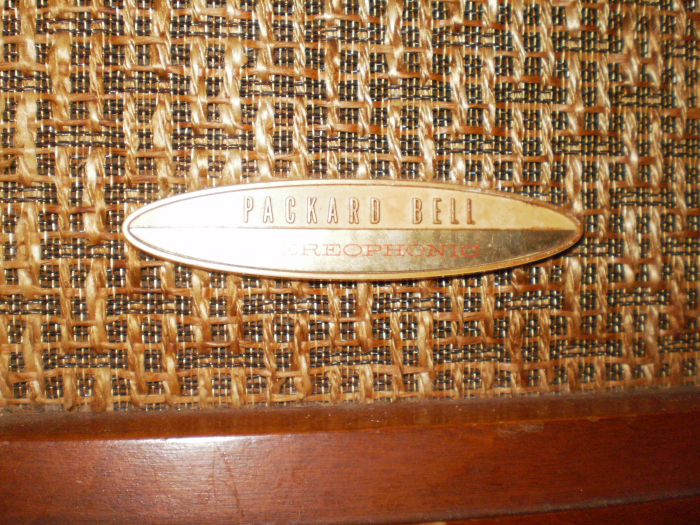
Record-changer wrote:It is my experience that if a unit has been in continuous use since it was bought, there is no reason (other than cracked insulation on a power cord) to stop using it. It is the unit that is put away for years that is more likely to have trouble.
As long as electrolytic capacitors are still in use, they retain their dielectric properties. If an electrolytic capacitor is left unused, it changes its properties, increasing the capacity, but also reducing the maximum voltage it can take. One of five things happens when the set is powered up with a changed capacitor:
1. The capacitor ruptures, spewing its contents inside the set. If it is in a higher voltage area, it can cause other damage.
2. The capacitor opens, causing the set to have a very loud hum (if in the power supply) or blocking the signal (if a coupling capacitor between stages). This also happens if the capacitor has a bad seal and has totally dried out.
3. The capacitor shorts, blowing out other components.
4. The capacitor changes back the way it should be. The set hums for a few minutes, the works normally.
5. The capacitor forms back almost the way it should be, causing noisy or erratic operation.
As for number
"3" - if certain capacitors get "leaky" (which is a common effect due to aging) they'll stress the tubes associated with them.
The effect isn't noticeable sometimes - most people can't hear this happening
until it's too late.
(yes, the set sounds "wonderful" to you because you're not knowledgeable of how it really should sound)
You'll never notice the output tubes dangerously "red-plating" down inside the console with the back on it.
People with their first tube stereo, etc, aren't wary of such things.
This mostly happens in the tube grid circuits, causing excessive current draw/bias reduction of the output tubes, which then puts additional stress and overheating on the output transformers and power supply components - eventually resulting in massive (and expensive) failure of the set.
I try to educate people about this, because I hate to hit them with a super-hefty service charge when these things happen.
I've seen it happen numerous times as a servicer, and it isn't pretty.
My advice is to not shell out the tons of money for expensive, hard to find transformers, if you simply have the thing check out thoroughly.