Old "talking book" record players

Electrically amplified phonographs or radio/phonographs and related components (approx. 1928-1990).


Topic author
Radiotvnut
Junior Member
Posts: 22
Joined: Tue Feb 01, 2011 8:18 pm
Location: Meridian, MS

Old "talking book" record players

by Radiotvnut » Tue Feb 01, 2011 10:52 pm

Anyone have/collect old "talking book" phonographs? These were the type of record player that was issued to blind or visually impaired individuals in order to play talking book records. These record players were either loaned by the Library of Congress or could be purchased through organizations such as the American Foundation for the Blind or the American Printing House for the Blind. The earliest models from the '30's played @ 33 1/3 rpm. By the late '50's, the speed of 16 2/3 rpm was added. By the mid '60's, three speed machines with the speed of 8 1/3 rpm were produced. The first records were on 12" disc, later records were 10", and the last round of talking book records were on 9" 8 1/3 rpm flexible disc. I'm legally blind myself and use talking books + I have a strong interest in vintage electronics is the reason I collect these old players and "talking book" records.

Herei's my oldest machine, an American Foundation for the Blind model 20 wind-up model from around '34-'35. This unit has a spring driven motor; but, the electronic phono cartridge was designed to drive a pair of headphones. It plays at 24 and 33 RPM and I have never seen a 24 rpm record. As you can see, someone replaced the tonearm with one from a cheap '50's/'60's era kiddie phonograph. I wish I knew what the original tonearm looked like.
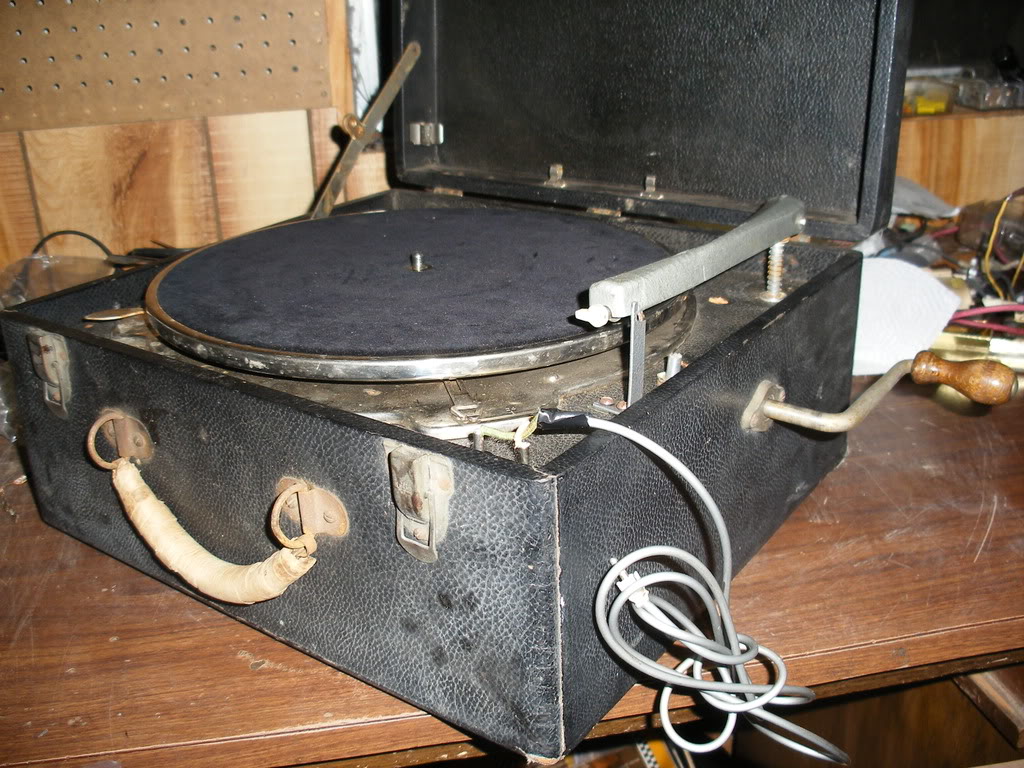
Image

Here's a slightly newer fully electric American Foundation for the Blind model U-14. This one plays at 33 and 78 rpm. I'm guessing it's from the late '30's.
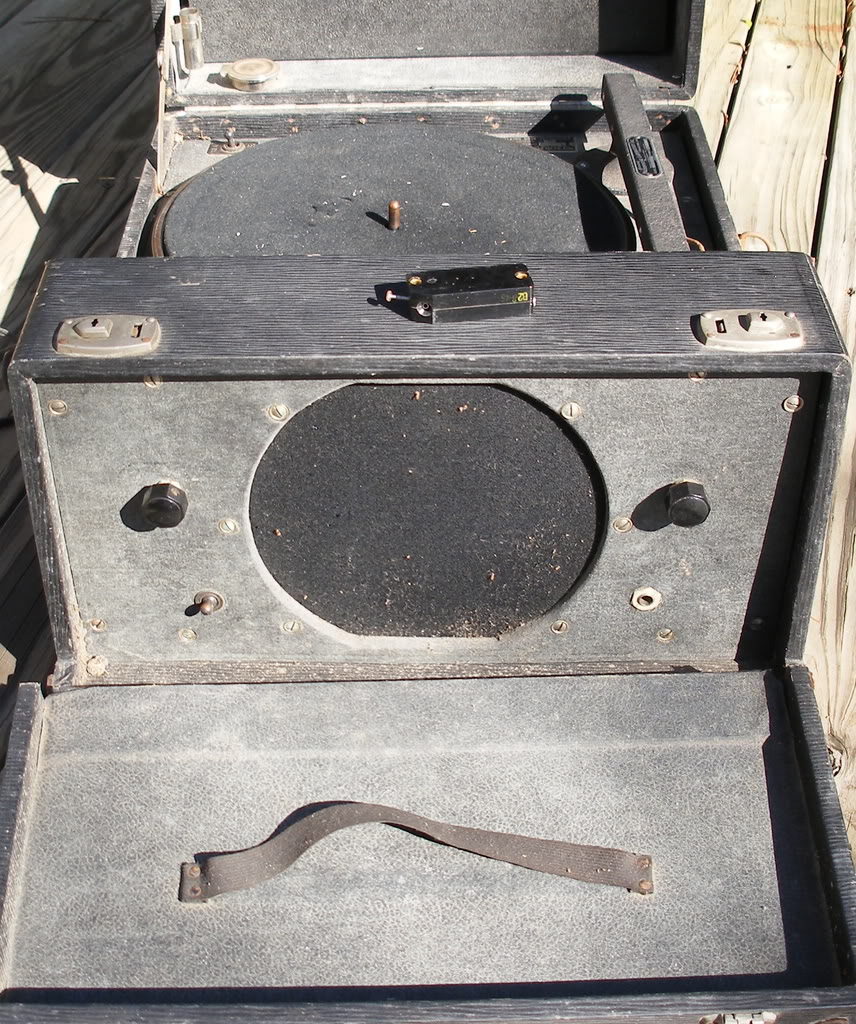
Image

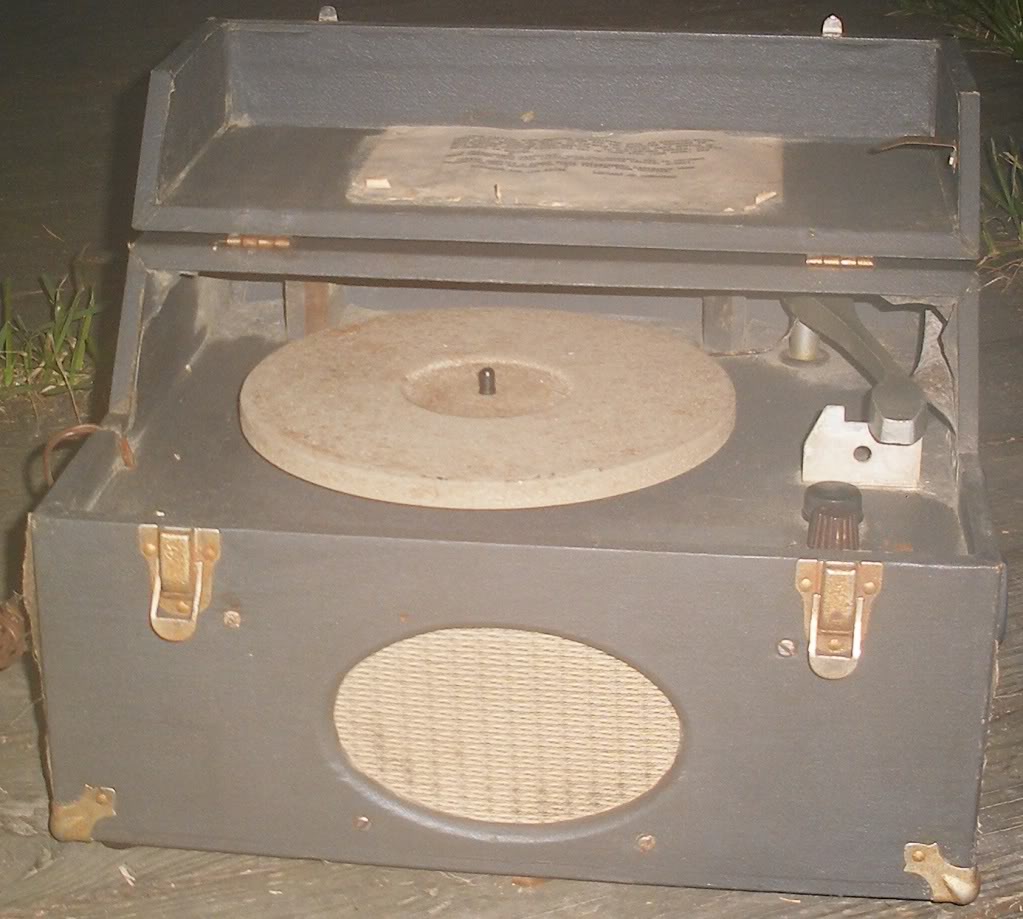
Here's the model I use the most. A circa '65 model AE-3 that plays @ 8, 16, and 33 rpm. This is a tube type unit and was made until sometime in '68, when the plastic solid state models were introduced. IMHO, this is the model they should have stuck with. They sound better and are much better built than the plastic junkers of the '70's and later.
Image

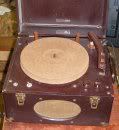
Model AC-50 American Foundation for the Blind model that I assume is from 1950. This is a tube unit that plays @ 33 and 78 rpm.
Image

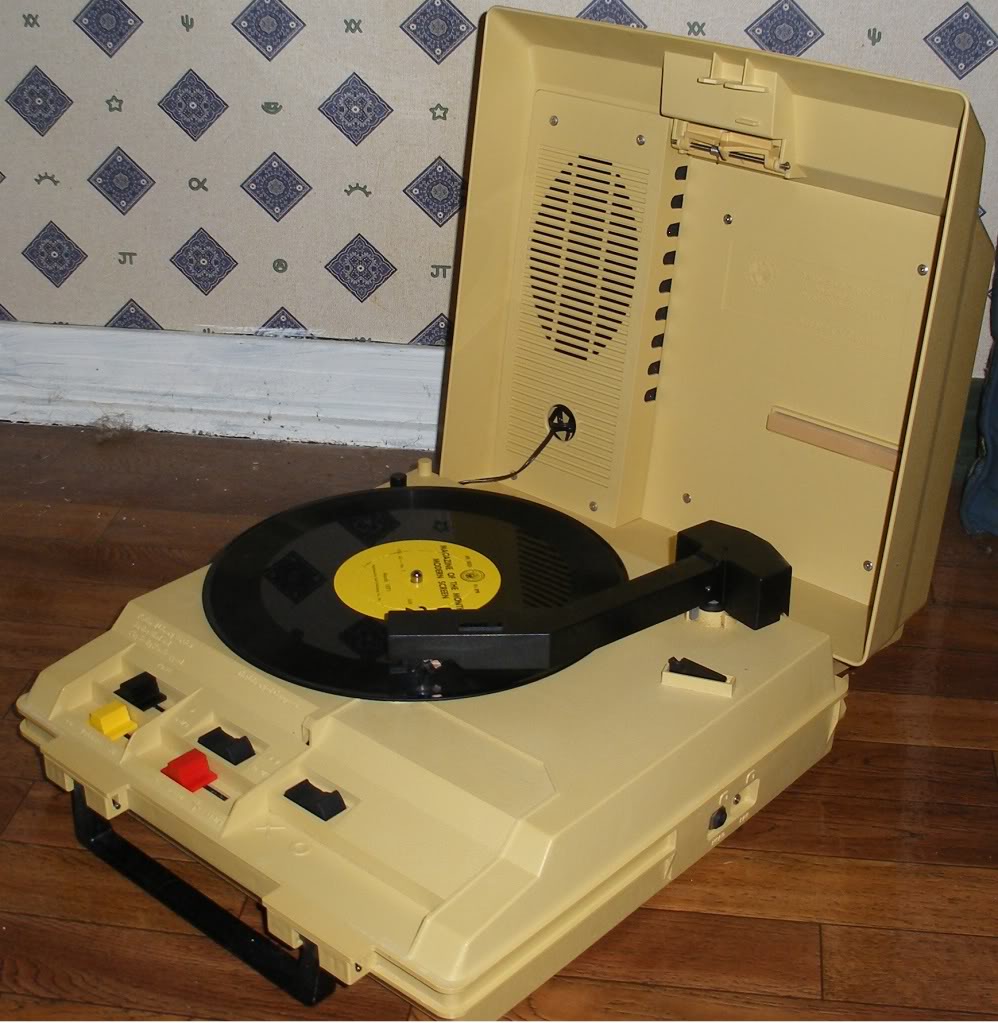
This is one of the last talking book record players from the '90's, the model A-1. This is an all plastic solid state model that plays 8, 16, and 33. Also has a variable pitch control and a special tonearm that does not lift. Instead, it is pressed down, moved towards the record, and when the tonearm contacts a small guide, the tonearm is released and the needle drops into playing position. This player is very weak and tinny sounding in comparison to the '60's tube type units. These players were used up until the end of 2000, when the Library of Congress discontinued the last magazines on flexible disc. Beginning in '01, all books and magazines were issued on 4-track, 15/16 IPS cassettes. Now, the cassette format is obsolete in favor of digital cartridges.
Image

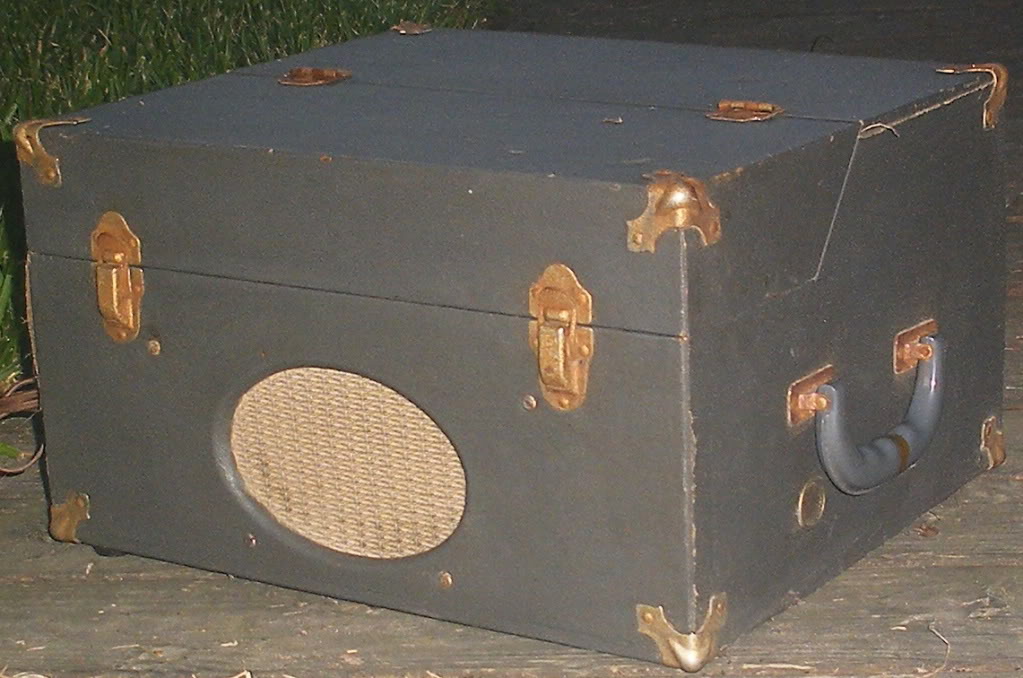
I also have a modified (by AFB) Philco 48-1201 "Bing Crosby" record-in-slot phonograph that plays 33 rpm talking books and regular 78 rpm records. It also has a headphone jack, a tonearm cuing device, and a device to allow the user to place the tonearm anywhere on the record. The standard 78 rpm consumer model didn't have this features. And, I have a model "C" talking book player from '55 that has a flip back top with a front mounted oval speaker grille. This one was built by DeWald and plays 33 rpm only. I will have to take a picture of these two models.

I don't own any of the older solid state plastic models, except for the one '90's model pictured. Actually, the only solid state model that I might like to find is the model AE-5. This one was in a two tone blue plastic case and was the first solid state model issued by the Library of Congress. I've also heard that some older talking book players had a built in AM radio, I've not seen any of these models, except for the '48 Philco "Bing Crosby" model.

EDIT: I found a picture of the '55 model "C" built by DeWald.
Image

Image


Thom
Senior Member
Posts: 374
Joined: Sat Apr 22, 2006 3:24 am
Location: Lancaster County Pa. USA

Re: Old "talking book" record players

by Thom » Thu Feb 03, 2011 1:29 am

Nice collection. Very nice. I remember my Grandpa having one of these when I was a kid. He had tunnel vision rather bad. I have one though only one authentic Assoc for the Blind record to play on it. Thanks for sharing.
Vinyl is disease which attacks that area of the brain desiring digital recordings. Once you catch it, you are cured.


Topic author
Radiotvnut
Junior Member
Posts: 22
Joined: Tue Feb 01, 2011 8:18 pm
Location: Meridian, MS

Re: Old "talking book" record players

by Radiotvnut » Thu Feb 03, 2011 6:39 am

Thom wrote:Nice collection. Very nice. I remember my Grandpa having one of these when I was a kid. He had tunnel vision rather bad. I have one though only one authentic Assoc for the Blind record to play on it. Thanks for sharing.


Was his player one of those late '50's / '60's era gray wooden cased models? The early versions from the late '50's and early '60's played 2 speeds. The 3 speed units came out in '65. And, many of the older two speed units were converted to 3 speed. Their physical appearance didn't change much from the late '50's until the first solid state model came out in '68. The '70's plastic models mostly looked alike, except for different case colors to distinguish the model year.


Thom
Senior Member
Posts: 374
Joined: Sat Apr 22, 2006 3:24 am
Location: Lancaster County Pa. USA

Re: Old "talking book" record players

by Thom » Fri Feb 04, 2011 1:03 pm

It was definetly not plastic but paper covered wood. Rather heavy duty looking. I believe it was grey in color.
Vinyl is disease which attacks that area of the brain desiring digital recordings. Once you catch it, you are cured.

User avatar

Record-changer
Senior Member
Posts: 1139
Joined: Fri Apr 21, 2006 8:11 pm
Location: Bloomington IN USA

Re: Old "talking book" record players

by Record-changer » Sat Feb 05, 2011 8:15 pm

They also mad an adaptor that fit on top of a 33 rpm turntable. It had ball bearings acting like planetary gears that reduced the speed of the second turntable on top to 8 rpm. A post pressed against the overarm support or the arm shaft to stop part of the assembly from turning to cause the speed reduction.
http://midimagic.sgc-hosting.com

Daylight-stupid time uses more gasoline.

Who is online

Users browsing this forum: No registered users and 5 guests

It is currently Thu Oct 06, 2016 8:15 pm