Page 1 of 2
need help
Posted: Sat Jun 09, 2012 3:47 am
by FCVPI99
dont know where to post this but i need speaker help (i dont know anything about speakers)
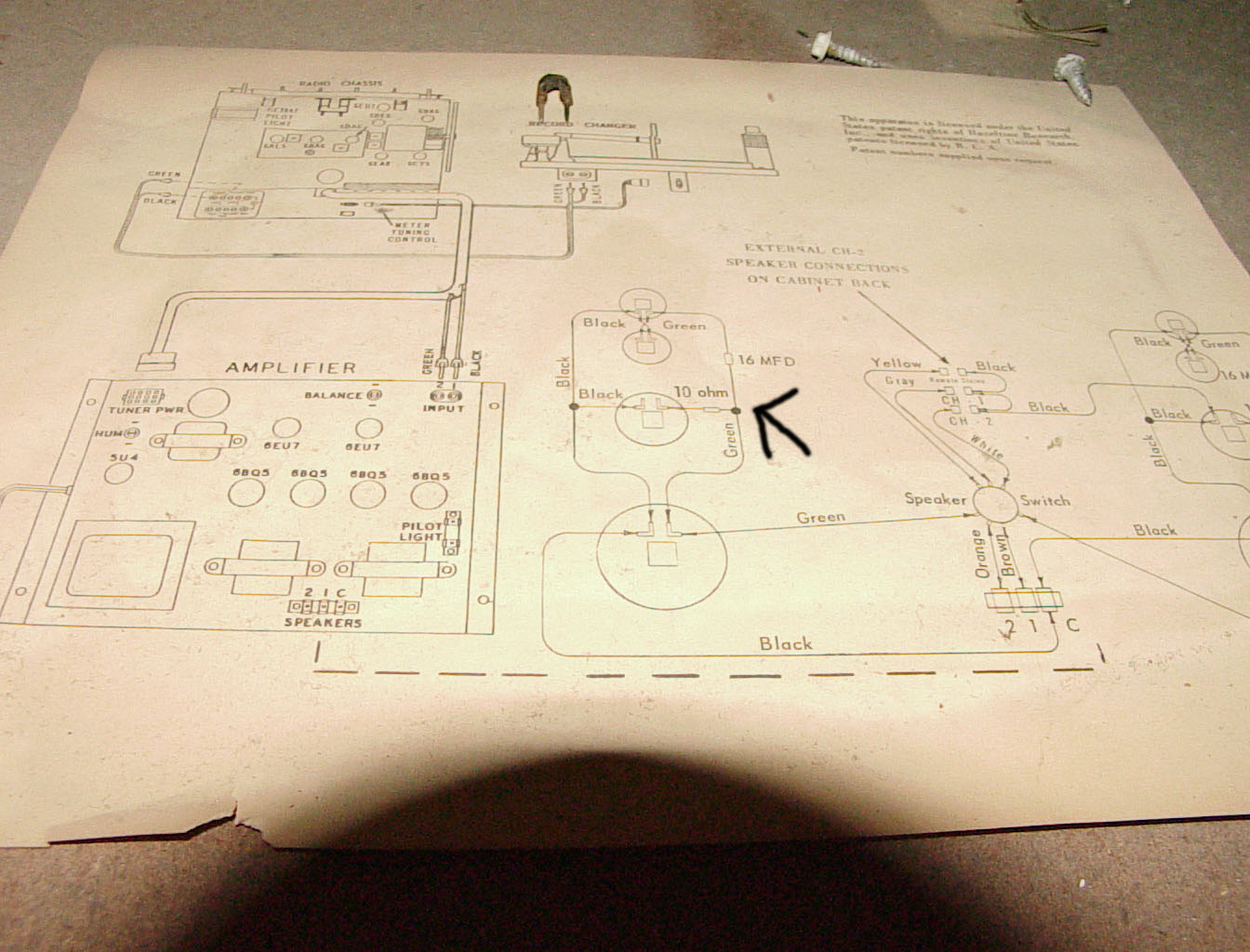
ok i have a Technics SA-290 Receiver that can take 8-16 ohm speakers. i have CD and photo hooked up to it i pulled speakers from old cabinet stereo i believe there are 10 Ohm due to something that looks like small M-80 fire work guessing a cross over that says 10 ohm on the schematic in old cabinet stereo. Each side has 4 speakers 1-15 inch woofer 1-6 inch mid-range and 2-4 inch tweeter i would like to get a sub woofer but only ones i can find are 8 ohm can i mix 8 ohm sub with 10 ohm speakers? if not does anyone who where to get 10 ohm sub?
Thank you
Re: need help
Posted: Sat Jun 09, 2012 5:05 am
by Ron Rich
Sometimes people get lucky, and can take a speaker from one unit and place it in another unit, without any problems.
But, due to the MANY differences that an engineer may have designed into the two different systems, the odds are against you. In some instances, you may "blow" your amp, or speakers--I would advise strongly that you locate some local person who has the knowledge to to it correctly--
Ron Rich
Re: need help
Posted: Sat Jun 09, 2012 5:45 am
by MattTech
Going by that diagram, those are all 4 ohm speakers in a magnavox console.
Re: need help
Posted: Sat Jun 09, 2012 9:46 am
by Rob-NYC
I may not be fully understanding the question here but, if this, or any receiver has two pairs of speaker terminals and switching that can allow both sets to be used at the same time (total of 4 spks) it can work into a 4-ohm load w/no problem.
I gave away a similar receiver just before Christmas and it would be fine for that sort of load.
The 10 ohm "firecracker" is a resistor used to pad down the midrange speaker.
If you are looking to add a sub, it should be -powered- that is, have it's own amp. Some older subs have terminals that permit them to be connected to the speaker terminals of older receiver which generally don't have dedicated sub outs.
Otherwise, the easiest way to connect it is to the arm contact of the volume control. This isn't ideal because the sub may only have a single input so you would only get bass from one channel, but it usually works well.
In any case, it is best if the sub has both it's own volume control and a low frequency crossover control so that you can set it to become effective only at the lowest frequencies that are desired ie: below 100Hz.
Rob/NYC
Re: need help
Posted: Sat Jun 09, 2012 4:59 pm
by FCVPI99
MattTech wrote:Going by that diagram, those are all 4 ohm speakers in a magnavox console.
i dont want this to come off wrong
but how can you tell??
Re: need help
Posted: Sat Jun 09, 2012 5:08 pm
by FCVPI99
Rob-NYC wrote:I may not be fully understanding the question here but, if this, or any receiver has two pairs of speaker terminals and switching that can allow both sets to be used at the same time (total of 4 spks) it can work into a 4-ohm load w/no problem.
I gave away a similar receiver just before Christmas and it would be fine for that sort of load.
The 10 ohm "firecracker" is a resistor used to pad down the midrange speaker.
If you are looking to add a sub, it should be -powered- that is, have it's own amp. Some older subs have terminals that permit them to be connected to the speaker terminals of older receiver which generally don't have dedicated sub outs.
Otherwise, the easiest way to connect it is to the arm contact of the volume control. This isn't ideal because the sub may only have a single input so you would only get bass from one channel, but it usually works well.
In any case, it is best if the sub has both it's own volume control and a low frequency crossover control so that you can set it to become effective only at the lowest frequencies that are desired ie: below 100Hz.
Rob/NYC
yes the SA-290 has 4 connecters for speakers 2 main and 2 remote the speakers that i can turn on and off they are wired same as they were in old stereo so between the total 8 speakers 4 are all connected to each other like a speaker that you would buy at store 2 wires come off stereo and go to speakers running all 4
i can rip a computer apart and rebuild but stereos are foreign to me LOL
Re: need help
Posted: Sat Jun 09, 2012 6:34 pm
by MattTech
FCVPI99 wrote:MattTech wrote:Going by that diagram, those are all 4 ohm speakers in a magnavox console.
i dont want this to come off wrong
but how can you tell??
As a long time service technician, and knowing Magnavox consoles the way I do, from experience is how I know.
I hope that answers your question.
Hint: observe my location information to the right--------->
Re: need help
Posted: Sat Jun 09, 2012 9:48 pm
by FCVPI99
ok cool thanks .. so is that gana kill my receiver? since the receiver is 8-16 OHM?
Re: need help
Posted: Sun Jun 10, 2012 3:36 am
by MattTech
FCVPI99 wrote:ok cool thanks .. so is that gana kill my receiver? since the receiver is 8-16 OHM?
The SA-290 is rated for 4-16 ohms.
So, no.
Re: need help
Posted: Sun Jun 10, 2012 3:54 am
by FCVPI99
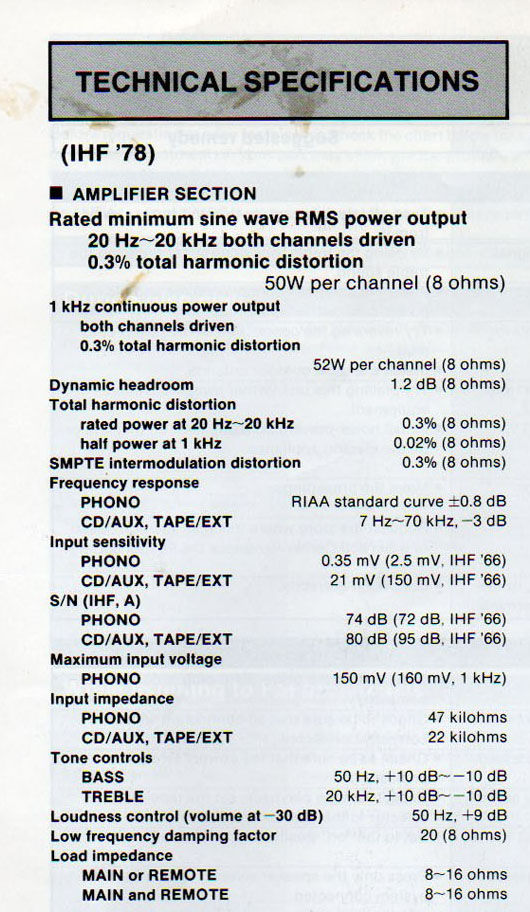
i know you a tech and all but per SA-290 operating instructions
load impedance
main or remote 8~16 ohms
main and remote 8~16 ohms
- img129.jpg (180.96 KiB) Viewed 1413 times
Re: need help
Posted: Sun Jun 10, 2012 6:16 am
by Rob-NYC
The fact that it can operate two sets of 8 ohm speakers at the same time (4 spks -two in each channel) equals 4 ohms in each channel. The amp is fine with that.
One word of caution; that receiver is likely a LOT more powerful than what was in whatever those speakers came from....go easy on the levels and don't overdo the bass.
Rob
Re: need help
Posted: Sun Jun 10, 2012 7:09 am
by FCVPI99
i figured that i dont go about 2 out of 10 most of the time its 1.5 i have base set at about 75% trouble at like 90% with loudness on the 15inchers do thump

now all i have to do is find someone who wants to buy the 4 speed phono and the tuner and stereo addon LOL
Re: need help
Posted: Sun Jun 10, 2012 3:37 pm
by MattTech
Rob-NYC wrote:The fact that it can operate two sets of 8 ohm speakers at the same time (4 spks -two in each channel) equals 4 ohms in each channel. The amp is fine with that.
One word of caution; that receiver is likely a LOT more powerful than what was in whatever those speakers came from....go easy on the levels and don't overdo the bass.
Rob
Correct.
ANY solid state amplifier is fairly adaptable to various loads - This amp has posted ratings pertaining to multiple speakers, yet a single speaker per channel is fine down to 4 ohms.
My documentation states that fact.
Re: need help
Posted: Sun Jun 10, 2012 10:19 pm
by FCVPI99
ok i understand that but does it mater that i tested the 15 inch and 15 alone there are 3 more speakers running a single channel does that matter ? should i disconnected main wire from stereo and test all 4 speakers hooked into each other?
sorry forgot to mention i just tested the 15 inch and its coming back 3.94 to 4.02 ohms (got a tester)
Re: need help
Posted: Thu Jun 14, 2012 6:34 pm
by Record-changer
A few bits of info:
- The speakers have different impedances at different frequencies. Each one has its lowest impedance in the area it works best in (when combined with the crossover). Only one of the speakers actually shows the rated impedance at one time. Also note that the capacitor and the resistor add to the impedance.
- The speakers and the enclosure are interrelated. The enclosure affects both the frequency response and the impedance of the speakers. Placing the speakers in an enclosure not designed for them can create a situation where the speakers sound awful and the impedance values swing wildly with frequency.
- Depending on the design of the amp, running it outside the rated impedance can damage it. Other amps will distort, rather than fail when presented with the wrong impedance. Note that I have seen one amp fail when given NO load.
- Some multiple speaker switches connect the main and remote speakers in series, rather than parallel. This adds the impedances, rather than halving them. Others add resistors in series with both speakers when more than one is selected.
- Speaker impedance must be determined with an impedance meter, not an ohmmeter. The DC resistance of a speaker is a lot lower than its impedance.