
Ge portable turntable, nothing but humm.
Electrically amplified phonographs or radio/phonographs and related components (approx. 1928-1990).
-
jman2ududer
Topic author - Junior Member
- Posts: 3
- Joined: Tue May 03, 2011 9:33 am
Hi folks, I just acquired a ge trimline stereophonic 200 portable turntable 3 tube unit. Its very clean and doesnt look like it was ever ised very much. The turntable spins with a little push, but doesnt end enough torque to retirn the arm on anything but 78 speed. Is that a motor issue or a cap issue?. Also I can hear the record being played at the needle but I get npthing but hum from the speakers. I pulled the table out and everything looks brand new in there. there was one exposed wire that I thoight might be grounding out so I insulated it with black tape. It npr longer pops when I touch the arm, dials bit still no sound and the moter still wpnt gpa on ots own. Any advise for me?
-
 MattTech
- Senior Member
- Posts: 1461
- Joined: Tue Apr 29, 2008 7:38 am
- Location: Philadelphia Pa USA - Home Electronics - Service Technician
The best advice is to locate and take it to a service technician, since it's obvious you don't have the skills or experience to go messing with it.
Post your location, and perhaps a local tech will respond.
Post your location, and perhaps a local tech will respond.
The Internet is a marvelous thing, however it's not a good substitute for actually being there.
-
 Record-changer
- Senior Member
- Posts: 1139
- Joined: Fri Apr 21, 2006 8:11 pm
- Location: Bloomington IN USA
Probably the idler wheel.
-
jman2ududer
Topic author - Junior Member
- Posts: 3
- Joined: Tue May 03, 2011 9:33 am
Im sorry, I meant helpful advise. I may not have any experience with the old players, but I want to learn and since I have a whopping 15 dollars invested in it I am wanting to fix it myself. I am no expert by any means, but I dont think the idler wheel would affect the sound output to the speakers. Maybe the spin on the turntable. I really think I have a 2 part problem here, and I wanted to know if anyone had technical opinions about them, not me. Thanks in advanceto anyone with some advice about that.
-
Bobby Basham
- Senior Member
- Posts: 498
- Joined: Sat Aug 26, 2006 2:50 pm
- Location: Tucson, Arizona, USA
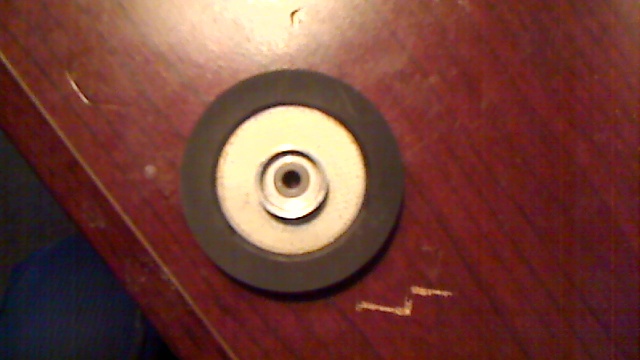
If that idler wheel has become hard and shiny, like plastic, it no longer has that "grip" against the inner rim of the turntable. That's like a tire spinning on ice and making no progress. It should have a rubbery, spongey feel. Springs usually hold up pretty well. They keep the idler wheel pressed against the inner rim.
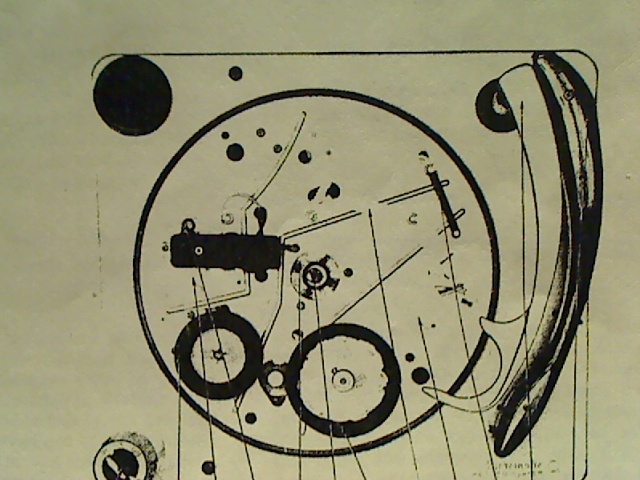
I don't know the names of all the parts, but the idler wheel is mounted on a linkage that extends outward (with the help of the spring) to make contact. That linkage could be dirty and not extending completely outward for the idler wheel to make complete contact. Some parts should be clean and dry, while others need to be lubed. The motor may also need to be taken apart and cleaned if there is a speed issue. I found an old book from the 50's on "general" turntable repair. It's helpful if you wanna know the basic parts and get the mechanics on how these things work.
As far as the sound issue(s) go, that could be a variety of things. Bad capacitors and other semiconductors can produce hum. Just because tubes light up doesn't mean that they are good. We have one electronics store in Tucson that still has an old tube tester out in the main area. This is like an old Mom-n-Pop shop that still carries cartridges, needles, scopes, meters and every connection you can think of. Oh, if the ground wire is broken from the cartridge, that could produce hum.
Speaking for myself, I go for the electrolytic caps and test resistors. Caps can leak and get way out of tolerance over the years due to age, and since you have a tube unit, they may be the likely culprits. I've had some caps/resistors register zero while others went way off the scale. It's possible that everything else could be okay.
One good thing is that you have "sound", even though it may be hum. The unit isn't completely dead and there is still hope. I have one small Maggie tube console that played, but had dead radio. Replacing the caps brought it back the life and it plays bright and clear. I didn't (but should have) take the time to check out the other components. It sits in the hallway by bedrooms 3 and 4 (big house).
It's great to be able to fix things yourself, but if you wanna learn stuff like this, you're gonna have to do alot of reading on how things operate and you may have to have some "junk" units to experiment with. It may come in handy if you come across another unit and want to get it working again.
If this is a one-shot deal and don't plan on repairing anything more in your lifetime, it could be risky if you wanna do it yourself and possibly ruin everything. If you don't know the difference between a soldering gun and a kitchen blender, you're in trouble. If you've worked on stuff before like guitar amps, amps/receivers in general, you can transfer that knowledge to record player amps.
The only issue would be the "mechanical" operations of that turntable, since they can be finicky creatures. Some of the parts could be gunked up/stuck and don't want to move like they should, affecting the change cycle and speed. Different areas should be clean/dry while others should be lubed. Oops, I said that earlier.
TECHS AND OTHER KNOWLEDGEABLE FOLKS, I'm not encouraging newbies to dive in and tear up their new acquisitions, just wanna let them know what it entails, because it can be quite a daunting task, and maybe they will consider sending their stuff to a good tech. I've destroyed a few things throughout the years, but it was a learning experience, and new units always showed up down the road. You wouldn't believe the stuff that folks have given me, and I learned from previous experiences of what NOT to do.
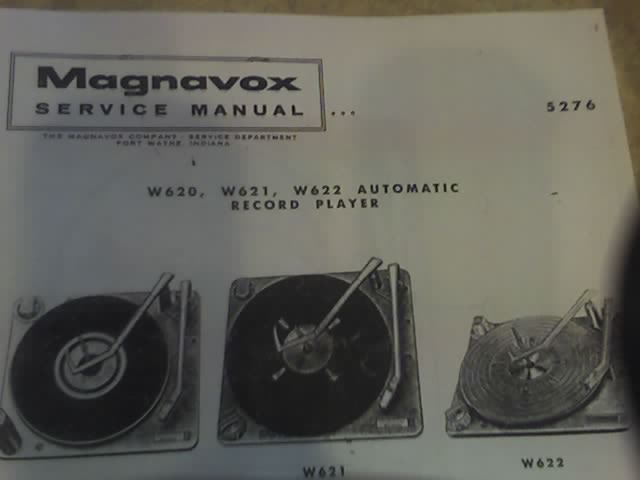
On another note, Congratulations, jman2ududer, on finding a nice W620 turntable for your Maggie, and it snapped right into place with no complications! If you need a service manual for that, I can email that to you.
Here I am, babbling and long winded again. --BB
Bobby Basham
Tucson, Arizona
I don't know the names of all the parts, but the idler wheel is mounted on a linkage that extends outward (with the help of the spring) to make contact. That linkage could be dirty and not extending completely outward for the idler wheel to make complete contact. Some parts should be clean and dry, while others need to be lubed. The motor may also need to be taken apart and cleaned if there is a speed issue. I found an old book from the 50's on "general" turntable repair. It's helpful if you wanna know the basic parts and get the mechanics on how these things work.
As far as the sound issue(s) go, that could be a variety of things. Bad capacitors and other semiconductors can produce hum. Just because tubes light up doesn't mean that they are good. We have one electronics store in Tucson that still has an old tube tester out in the main area. This is like an old Mom-n-Pop shop that still carries cartridges, needles, scopes, meters and every connection you can think of. Oh, if the ground wire is broken from the cartridge, that could produce hum.
Speaking for myself, I go for the electrolytic caps and test resistors. Caps can leak and get way out of tolerance over the years due to age, and since you have a tube unit, they may be the likely culprits. I've had some caps/resistors register zero while others went way off the scale. It's possible that everything else could be okay.
One good thing is that you have "sound", even though it may be hum. The unit isn't completely dead and there is still hope. I have one small Maggie tube console that played, but had dead radio. Replacing the caps brought it back the life and it plays bright and clear. I didn't (but should have) take the time to check out the other components. It sits in the hallway by bedrooms 3 and 4 (big house).
It's great to be able to fix things yourself, but if you wanna learn stuff like this, you're gonna have to do alot of reading on how things operate and you may have to have some "junk" units to experiment with. It may come in handy if you come across another unit and want to get it working again.
If this is a one-shot deal and don't plan on repairing anything more in your lifetime, it could be risky if you wanna do it yourself and possibly ruin everything. If you don't know the difference between a soldering gun and a kitchen blender, you're in trouble. If you've worked on stuff before like guitar amps, amps/receivers in general, you can transfer that knowledge to record player amps.
The only issue would be the "mechanical" operations of that turntable, since they can be finicky creatures. Some of the parts could be gunked up/stuck and don't want to move like they should, affecting the change cycle and speed. Different areas should be clean/dry while others should be lubed. Oops, I said that earlier.
TECHS AND OTHER KNOWLEDGEABLE FOLKS, I'm not encouraging newbies to dive in and tear up their new acquisitions, just wanna let them know what it entails, because it can be quite a daunting task, and maybe they will consider sending their stuff to a good tech. I've destroyed a few things throughout the years, but it was a learning experience, and new units always showed up down the road. You wouldn't believe the stuff that folks have given me, and I learned from previous experiences of what NOT to do.
On another note, Congratulations, jman2ududer, on finding a nice W620 turntable for your Maggie, and it snapped right into place with no complications! If you need a service manual for that, I can email that to you.
Here I am, babbling and long winded again. --BB
Bobby Basham
Tucson, Arizona
- Attachments
-
- Cover-Page 620.jpg (22.77 KiB) Viewed 2203 times
-
- Picture 58.jpg (111.32 KiB) Viewed 2203 times
-
- Idler-Wheel.jpg (61.99 KiB) Viewed 2203 times
Ditto Bobby and also search online for how to recap old amps and radios. There is a wealth of information out there. "JustRadios" is one and there is a Philco restoration site that go through step by step procedures. That is how I learned and yes I made mistakes but that is part of the learning process. Remember the high voltage aspect or it will remind you. Patience is key. That will take care of the hum. As for changers they can be rather fussy. Best to find a service manual or book on servicing changers. One of the most frequent mistakes made on these is lubricating some part that is meant to operate dry ie; tripper mechanism. Idler wheels can be rebuilt by some reputable companies out there if need be. Westtech services comes to mind. Hope this helps.
Vinyl is disease which attacks that area of the brain desiring digital recordings. Once you catch it, you are cured.
-
Bobby Basham
- Senior Member
- Posts: 498
- Joined: Sat Aug 26, 2006 2:50 pm
- Location: Tucson, Arizona, USA
Thanks, Thom.
Since jman2ududer has invested a whopping 15 dollars into his recently acquired unit, there shouldn't be much emotional attachment there, and this could be his first guinea pig and get his foot in the door to repairing it. I've bought a few things at the thrift stores to mess with...If I fix it, good...If I trash/destroy it, then so be it. No big loss here. Sometimes I buy stuff just to tinker with, and there is no love loss if I can't restore it. Some things are just too far gone and not worth restoring.
If available, get a service/repair manual and schematic, and have at it. Do some research and take that thing apart and check all the different areas of that turntable, and read up on what causes amps to hum with no other sound. I'm just guessing that jman2ududer's two issues are an easy fix. The cartridge may be a third issue incase everything else is repaired.
I truly believe the knowledge you gain will outweigh your original 15 dollar investment. Oh, once that light bulb come on, this can really be an addicting hobby. Once you get the hang of it, repairs seem to come easier down the road, learning from past mistakes, at least for me.
Jump in there with both feet, observing everything, and you'll see how things fall into place. Every repair does not require a PROFESSIONAL TECH, and don't let them talk you into paying a gazillion bucks for shipping/return shipping plus their rediculous prices for parts and repairs. If you do some homework, many repairs can be done on your own. --BB
Since jman2ududer has invested a whopping 15 dollars into his recently acquired unit, there shouldn't be much emotional attachment there, and this could be his first guinea pig and get his foot in the door to repairing it. I've bought a few things at the thrift stores to mess with...If I fix it, good...If I trash/destroy it, then so be it. No big loss here. Sometimes I buy stuff just to tinker with, and there is no love loss if I can't restore it. Some things are just too far gone and not worth restoring.
If available, get a service/repair manual and schematic, and have at it. Do some research and take that thing apart and check all the different areas of that turntable, and read up on what causes amps to hum with no other sound. I'm just guessing that jman2ududer's two issues are an easy fix. The cartridge may be a third issue incase everything else is repaired.
I truly believe the knowledge you gain will outweigh your original 15 dollar investment. Oh, once that light bulb come on, this can really be an addicting hobby. Once you get the hang of it, repairs seem to come easier down the road, learning from past mistakes, at least for me.
Jump in there with both feet, observing everything, and you'll see how things fall into place. Every repair does not require a PROFESSIONAL TECH, and don't let them talk you into paying a gazillion bucks for shipping/return shipping plus their rediculous prices for parts and repairs. If you do some homework, many repairs can be done on your own. --BB
I think his hum is most likely either a bad cartridge or electrolytic capacitors or both. A good unit to learn repairs on too with help. So, let's keep it friendly. All of us who repaired these oldies began with simple units and worked our way up the food chain.
Who is online
Users browsing this forum: No registered users and 3 guests
It is currently Thu Oct 06, 2016 8:59 am