Hi All,
I have been axked this quite often, so, I'm posting this as a "sticky topic"--
It's strictly my opinion, derived from over 50 years (Gosh, I'm OLD !) of"working with" them--other are invited to agree, or not --
Many factors should be considered in design, some of which are:
Materials used for both the point itself and the blade on which it sits--also, which type, round, or "crossbar" to use where. Pressure needed to carry the current load, and gap to be used.
That being done correctly, contact points need no "adjusting", if operating as they should !
The MOST often found failure, is contamination. The source of this must be found and eliminated. In order to do so, I use either of the following methods. If, for example, I am washing a Seeburg mechanism, I use a water based "de-greaser" and rinse in hot water. If I am just cleaning one contact, I use a "plastic safe- safety solvent". Once "clean" I examine the point looking for "pits/burns". If found, I use a "point file" AND then, a "burnishing tool", to "dress" the contact. I then check the "adjustments" of it carefully, and set it as necessary to achieve the specs as noted in the Service Manual. If "no specs" are available, I strive for a 15 ths "wipe" after the two contacts touch, as this "self-wiping action" tends to keep them "clean".
{EDIT} ONLY time a point file is required is if the contacts are "pitted, or burned"-- a burnishing MUST follow filing !
The above applies to "normal", round, silver, contacts.
Gold, or "Gold flashed" contacts, are somewhat different. These also must be free of contaminants/pits--BUT MAY be black in color, and should never be filed or burnished ("100%", gold--OK to burnish).
Any contact that is less then 50 % of it "original size" must be replaced, and most often, re-adjusted.
If "adjustment" is necessary, the contact blade, must be "reformed" across the whole blade length to the point connection. Do not "kink" it at any point. Bias it to it's bracer blade, if used, or, in the proper direction. If there is a bracer, use it to achieve the proper gap, if not, just bias it to do so. Pay particular attention to cases of "break before make", and "make before break",contact sets.
HTH, Ron Rich

"Contact points"- care/cleaning
Q&A about all types of jukeboxes: Wurlitzer, Seeburg, Rock-Ola, AMI, and more.
-
58starlight
- Junior Member
- Posts: 8
- Joined: Mon Mar 02, 2015 3:15 am
- Location: Fresno CA USA
Is there a place to buy the contact points themselves ? How about a tool to install them, I'm assuming some sort of rivet tool.
-
Ron Rich
Topic author - Forum Moderator
- Posts: 8193
- Joined: Sun May 06, 2007 11:31 pm
- Location: Millbrae (San Francisco area)CA, USA
No "tools" that I have ever seen--I solder them on. Also, no supply that I currently know of. I make them out of old silver coins, as needed.
Ron Rich
Ron Rich
-
58starlight
- Junior Member
- Posts: 8
- Joined: Mon Mar 02, 2015 3:15 am
- Location: Fresno CA USA
I have found them online but most seem to be sold through Chinese websites and I can not be sure what size and thickness they are. There are many different types for all kinds of applications.
-
 mistered4805
- Junior Member
- Posts: 7
- Joined: Sun Aug 30, 2015 10:33 pm
- Location: Panama City, Florida
I agree ...know when to replace, sand, and burnish the contacts. One good aspect of the older relays is that they are large enough to work with without a microscope. Cut a small piece of card (I have used IBM punch cards or a business card) to cut and fold a small strip to work back and forth between the contacts. . Put a couple of drops of contact cleaner on the card and the absorption is increased. This sometimes gives you several days grace while waiting for a replacement to come in. Amaze yourself at how many particles this will pick up before burnishing. On larger relays like contactors and holding relays the least amount of resistance will generate enough heat ( IR losses) to turn 'em black and if not corrected soon enough expect a failure.
-
Ron Rich
Topic author - Forum Moderator
- Posts: 8193
- Joined: Sun May 06, 2007 11:31 pm
- Location: Millbrae (San Francisco area)CA, USA
IMHO,one should NEVER "sand" a contact point ! Sand embeds in the silver, which can cause problems at any time-- A "contact file" should be used, only if/when the contact is compromised, and the the file must be followed up with a burnishing tool. Ron Rich
-
H-200 Squeak + Zip
- Junior Member
- Posts: 17
- Joined: Wed Oct 22, 2014 3:18 pm
- Location: Oakland, Ca., USA
Hi Ron,
I got a can of this:
http://www.amazon.com/gp/product/B0013I ... ge_o02_s00
but yesterday pal Rachel said it's not the right stuff.
Can you give a brand name of the right stuff for cleaning and de-greasing?
We have DeoxIt Gold for contact points.
Thanks.
Happy Holidays!
Chris
I got a can of this:
http://www.amazon.com/gp/product/B0013I ... ge_o02_s00
but yesterday pal Rachel said it's not the right stuff.
Can you give a brand name of the right stuff for cleaning and de-greasing?
We have DeoxIt Gold for contact points.
Thanks.
Happy Holidays!
Chris
-
Ron Rich
Topic author - Forum Moderator
- Posts: 8193
- Joined: Sun May 06, 2007 11:31 pm
- Location: Millbrae (San Francisco area)CA, USA
Hi Chris,
Other then the price--that's crazy--($137.xx for a 19 Oz. can ??), what's wrong with it ?? Should be OK, but I would go to OSH, ACE, or any of the Auto supply stores, and purchase a can of CRC "Lectromotive" cleaner--just spray on a biz card, or "bond paper", and wipe contacts. IMHO Deoxit, of any kind, or any product that leaves any "coating", should never be used on contacts that just touch. (Read "cleaning contacts" above in the stickies). Good Luck--Ron Rich
Other then the price--that's crazy--($137.xx for a 19 Oz. can ??), what's wrong with it ?? Should be OK, but I would go to OSH, ACE, or any of the Auto supply stores, and purchase a can of CRC "Lectromotive" cleaner--just spray on a biz card, or "bond paper", and wipe contacts. IMHO Deoxit, of any kind, or any product that leaves any "coating", should never be used on contacts that just touch. (Read "cleaning contacts" above in the stickies). Good Luck--Ron Rich
-
H-200 Squeak + Zip
- Junior Member
- Posts: 17
- Joined: Wed Oct 22, 2014 3:18 pm
- Location: Oakland, Ca., USA
Hi Ron,
Thanks! I paid $7 for that can on Amazon. Rachel thinks the $137 price is for "the gubmint." Of course, the govt is US, thanks a lot, Pentagon.
I may have to call you, Ron. We'll see.
Chris
Thanks! I paid $7 for that can on Amazon. Rachel thinks the $137 price is for "the gubmint." Of course, the govt is US, thanks a lot, Pentagon.
I may have to call you, Ron. We'll see.
Chris
-
Ron Rich
Topic author - Forum Moderator
- Posts: 8193
- Joined: Sun May 06, 2007 11:31 pm
- Location: Millbrae (San Francisco area)CA, USA
Hi Chris,
Yep--she's probably correct--they probably need that product to clean the $600.00 toilet seats !
If you are going to hafta call me, you're also gonna hafta wait about two weeks--my phone will remain "off the hook" till then--
Ron Rich
Yep--she's probably correct--they probably need that product to clean the $600.00 toilet seats !
If you are going to hafta call me, you're also gonna hafta wait about two weeks--my phone will remain "off the hook" till then--
Ron Rich
I have a few minor clarifying questions about some of the issues here and in Ron's other, similar sticky.
Ron refers at separate times to a "point file" and a "contact file," as distinguished from a "burnishing tool". Are "point file" and "contact file" the same thing, and what are the correct specifications for one?
After using a burnishing tool, my contacts look very "fresh" but they don't have a smooth, polished look. Is that a sign of a problem? How do you tell that you're "done."
"Gold contacts 'may be black'": is that in the sense of "might possibly be black" or "it's ok if they're black"?
I don't see contacts that are obviously "silver" or "gold," though I do see different sizes and different coloration. (I'm looking at a Seeburg R.)
Could you give an example? I can post photo if that will help.
Ron refers at separate times to a "point file" and a "contact file," as distinguished from a "burnishing tool". Are "point file" and "contact file" the same thing, and what are the correct specifications for one?
After using a burnishing tool, my contacts look very "fresh" but they don't have a smooth, polished look. Is that a sign of a problem? How do you tell that you're "done."
"Gold contacts 'may be black'": is that in the sense of "might possibly be black" or "it's ok if they're black"?
I don't see contacts that are obviously "silver" or "gold," though I do see different sizes and different coloration. (I'm looking at a Seeburg R.)
Could you give an example? I can post photo if that will help.
-
Ron Rich
Topic author - Forum Moderator
- Posts: 8193
- Joined: Sun May 06, 2007 11:31 pm
- Location: Millbrae (San Francisco area)CA, USA
"Contact/Point/Ignition files" are all the same IMHO--Last one I purchased was at an automotive supply store.
Burnishing tools are available at any GOOD electronics store--If your contact points are not as "smooth as a baby's bottom", you have not done a good job !!--Use less and less pressure !!
Black contacts of any material, in most cases, will not hurt their conductivity--unless they are also oil/dust contaminated.
Contact points themselves, can be made from a number, or combination of, materials--USUALLY, in "jukebox apps." the contacts made prior to the 70's are of a silver mix. When "low voltage DC switching" ( 27 and lower) came into use, gold was preferred.
HTH Ron Rich
Burnishing tools are available at any GOOD electronics store--If your contact points are not as "smooth as a baby's bottom", you have not done a good job !!--Use less and less pressure !!
Black contacts of any material, in most cases, will not hurt their conductivity--unless they are also oil/dust contaminated.
Contact points themselves, can be made from a number, or combination of, materials--USUALLY, in "jukebox apps." the contacts made prior to the 70's are of a silver mix. When "low voltage DC switching" ( 27 and lower) came into use, gold was preferred.
HTH Ron Rich
Should I burnish the contacts as part of the "tune up," or only if there's some evidence of a faulty connection?
Some of the contacts as button-shaped, some dome-like. What's the reason? Should they be treated any differently?
I'm trying to find the Goldilocks spot-- where I do enough to correct/ prevent problem but not so much as to create an additional one.
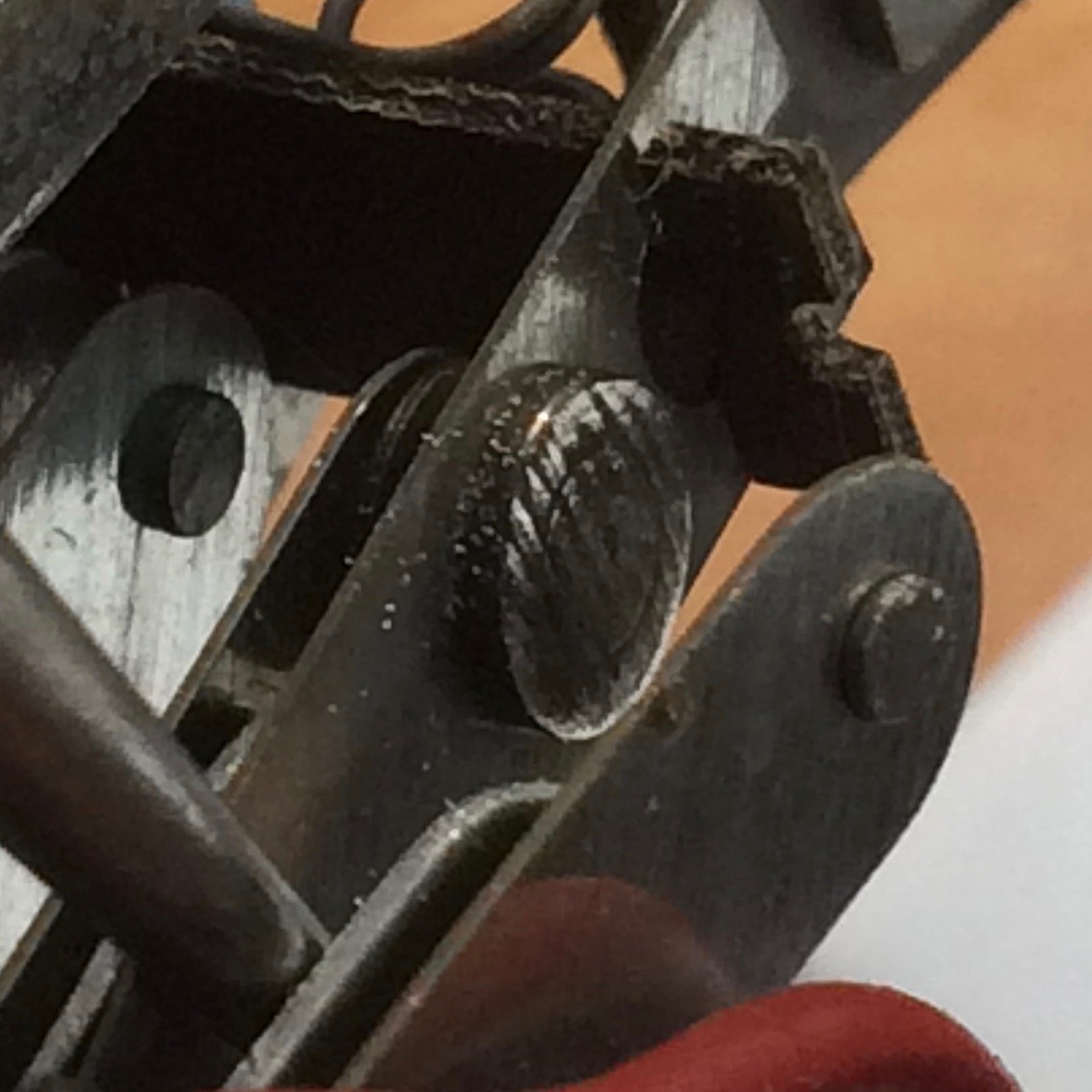
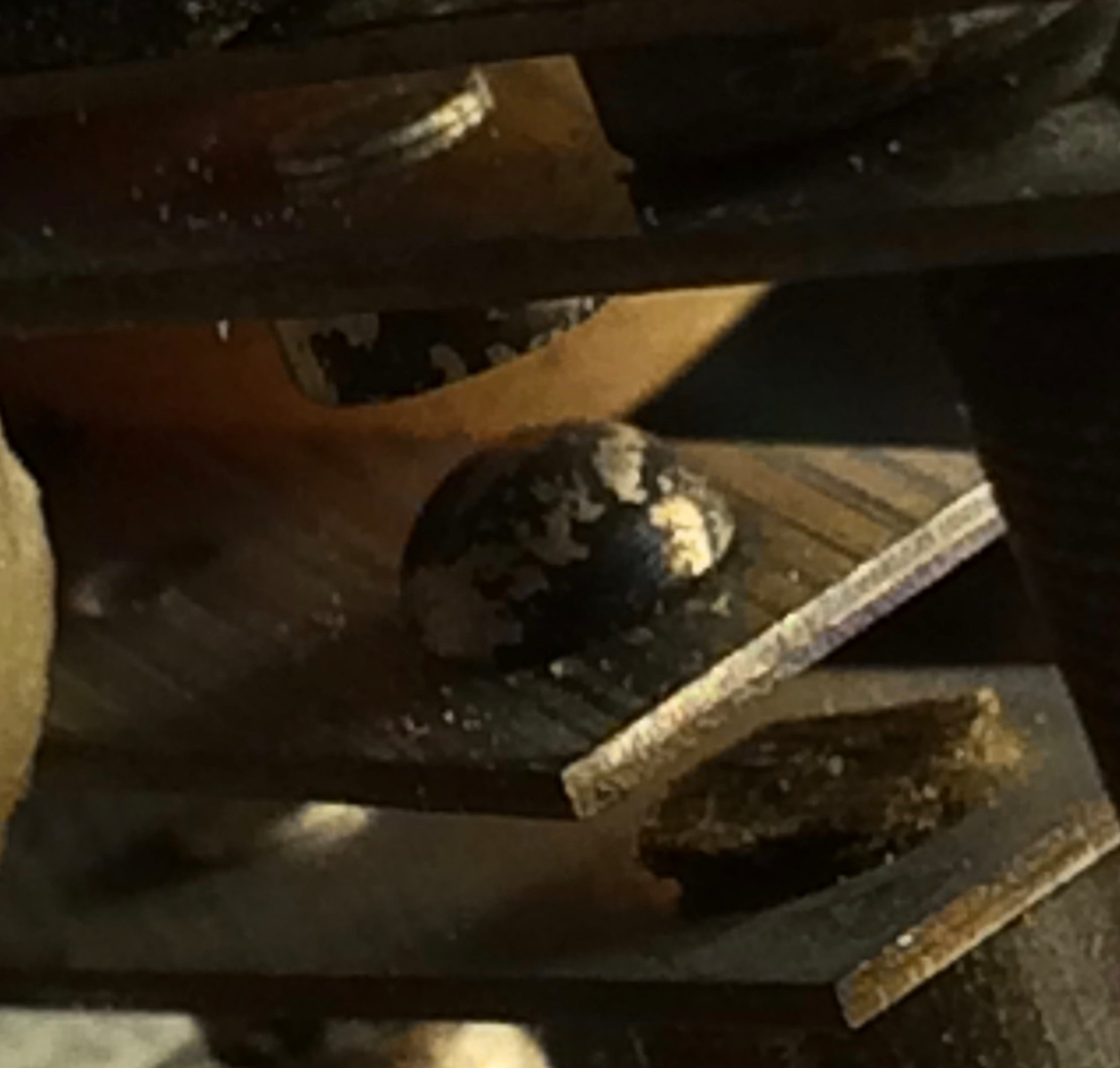
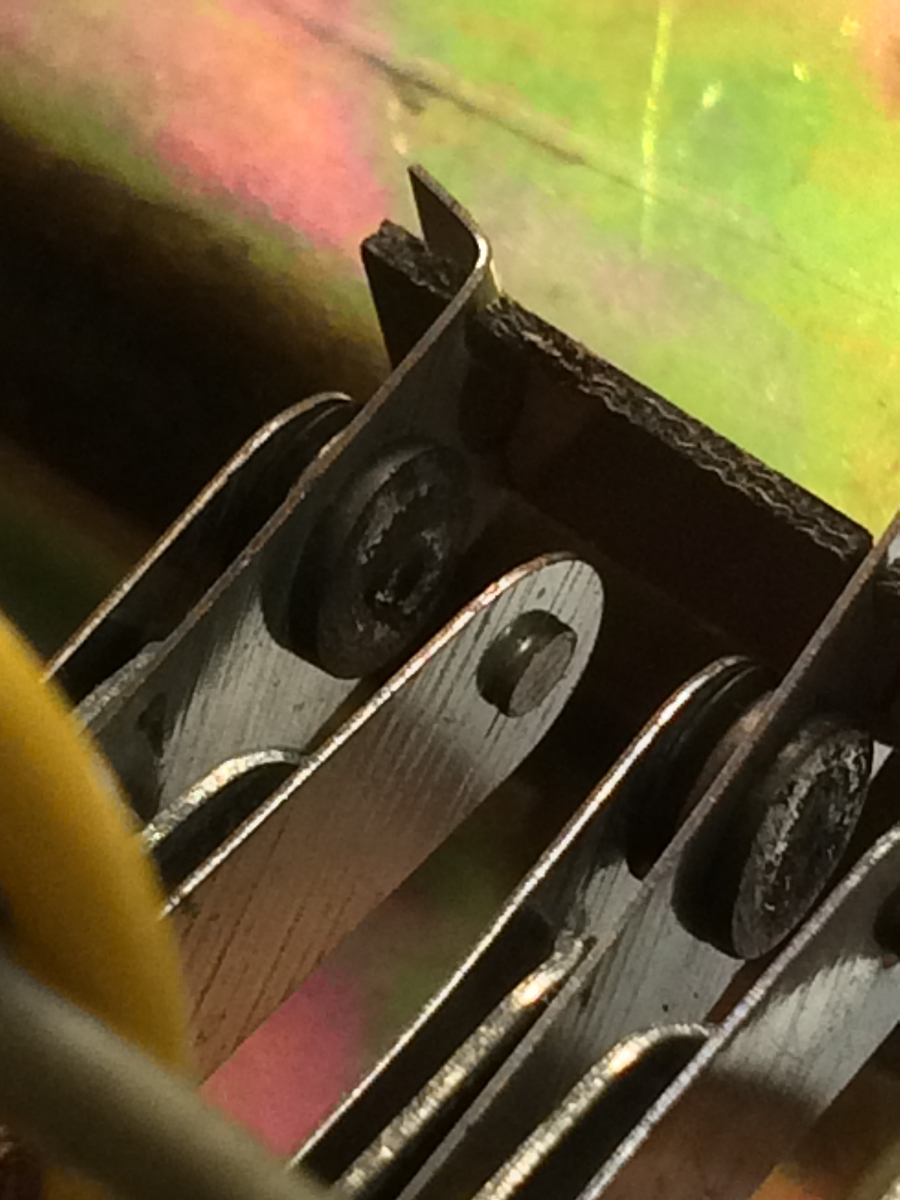
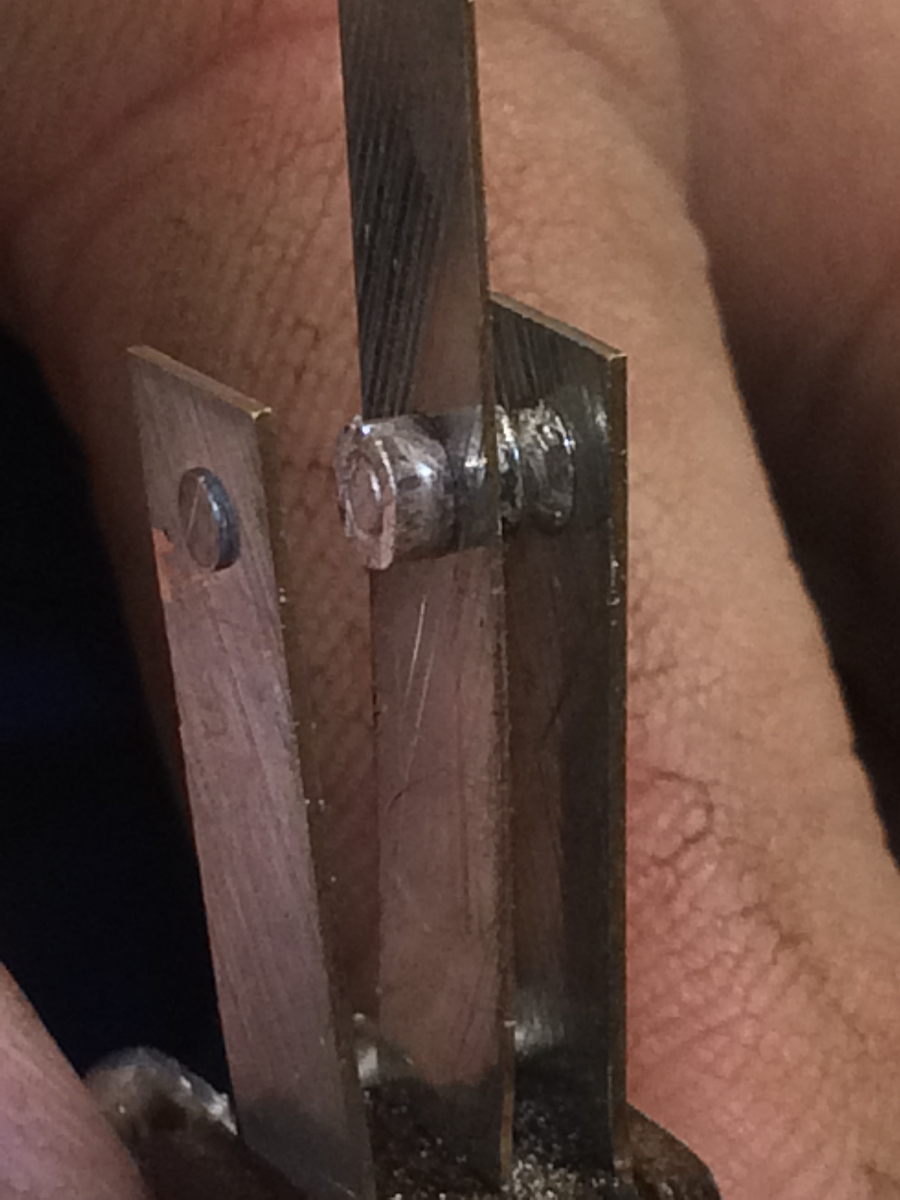
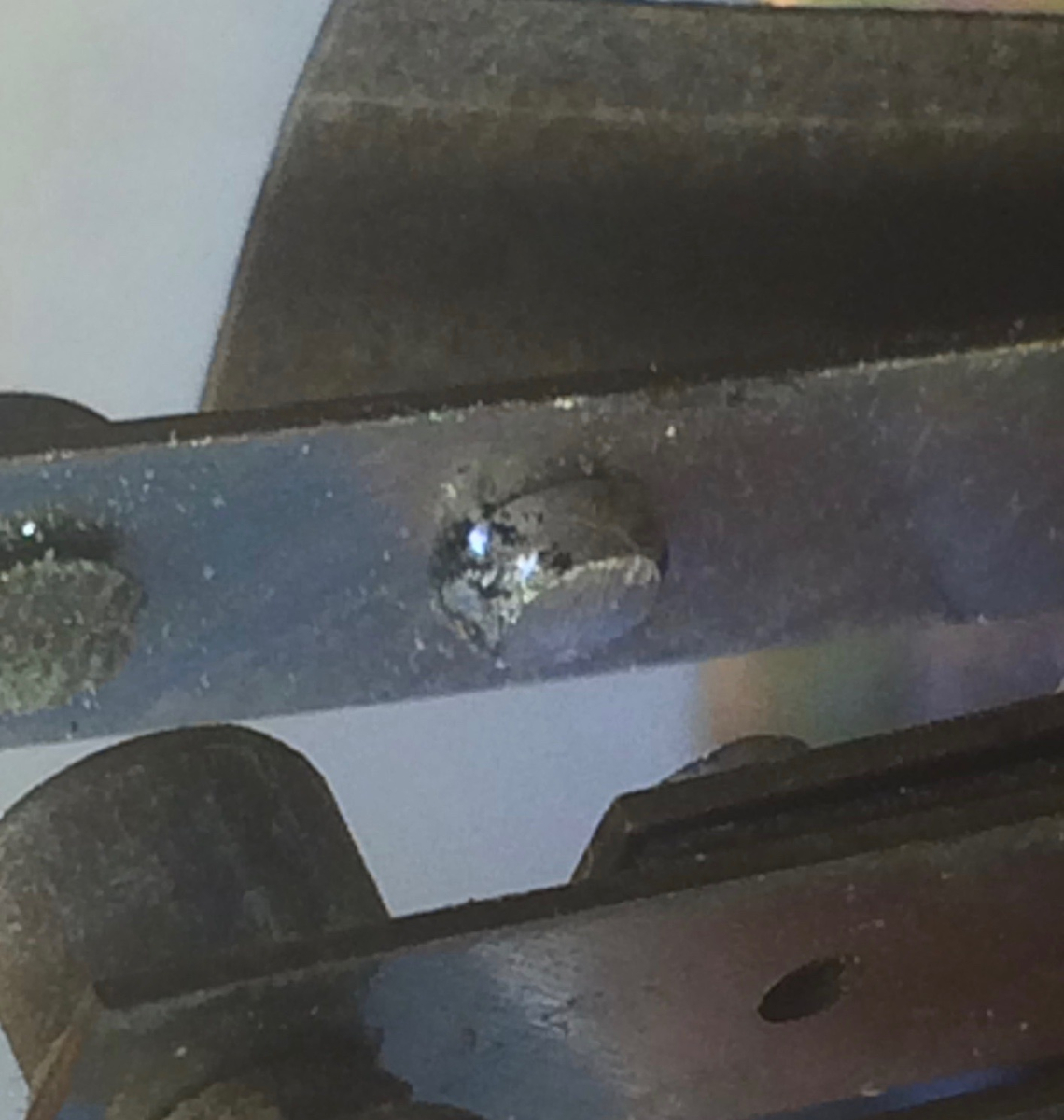
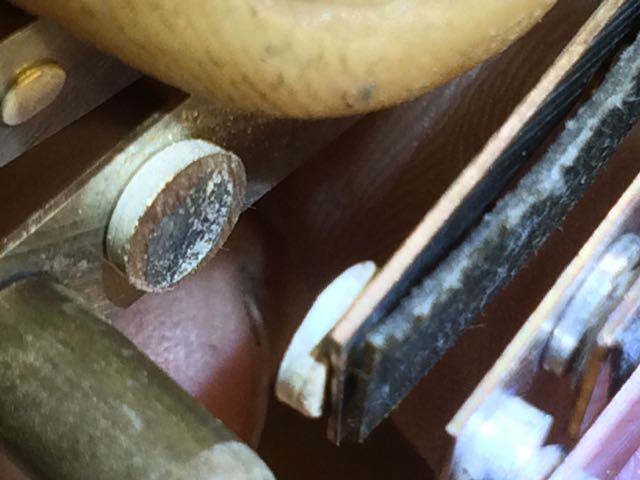
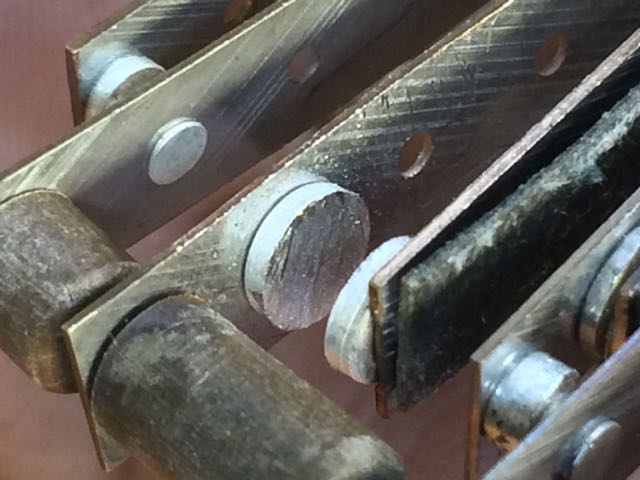
For the images below, I'd welcome a "diagnosis," including if the contact appears overburnished?
Some of the contacts as button-shaped, some dome-like. What's the reason? Should they be treated any differently?
I'm trying to find the Goldilocks spot-- where I do enough to correct/ prevent problem but not so much as to create an additional one.
For the images below, I'd welcome a "diagnosis," including if the contact appears overburnished?
-
Ron Rich
Topic author - Forum Moderator
- Posts: 8193
- Joined: Sun May 06, 2007 11:31 pm
- Location: Millbrae (San Francisco area)CA, USA
My rule for myself is: Don't fix nothin' whutz not broke ! Therefore I do not recommend that one burnish every contact. Just as in filing, unless there appears to be damage on the contact point, I do nothing to it (other then clean it) . If deeply "pitted" / "burned" the pit/burn must be removed, usually with a file, then "dressed" with a burnishing tool, then the blades must be re-adjusted.
As for the contact's shape--ain't nothing one can do to salvage that, other then replace the contact--which is the primary reason for my rule ! Ron Rich
As for the contact's shape--ain't nothing one can do to salvage that, other then replace the contact--which is the primary reason for my rule ! Ron Rich
Before. Strange coloring. Why?
After: smooth enough? ruined?
- before. strange coloring..jpg (42.31 KiB) Viewed 848 times
After: smooth enough? ruined?
- A.jpg (47.2 KiB) Viewed 848 times
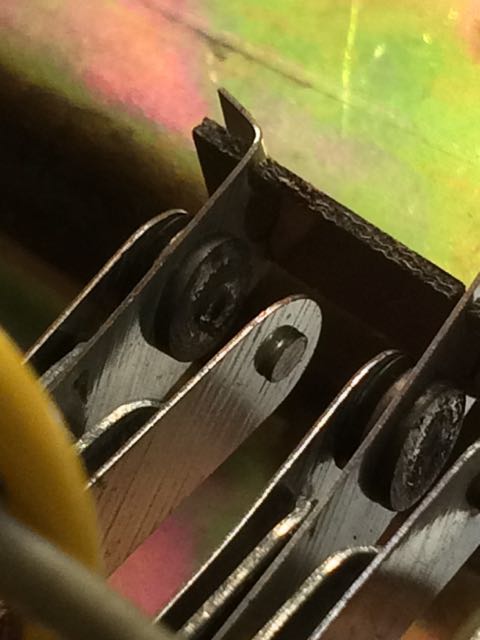
- is this what you mean by pitted? or is it just dirty?
- pitted.jpg (40.47 KiB) Viewed 848 times
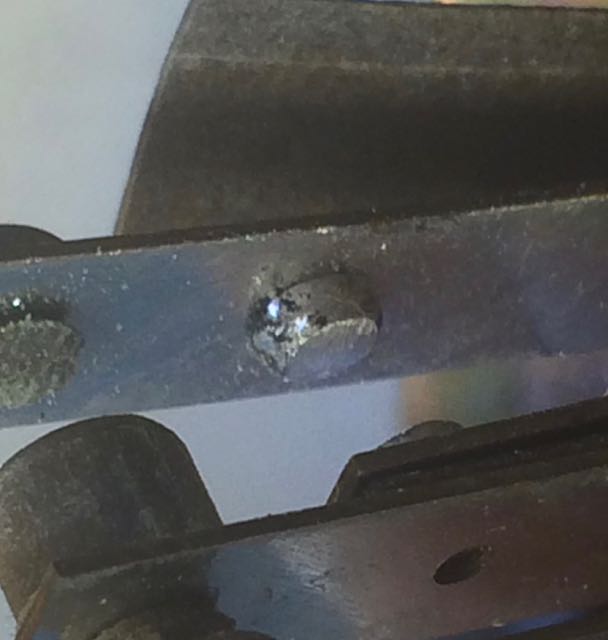
- ruined by burnishing? rough burnishing job?
- round.jpg (33.02 KiB) Viewed 848 times
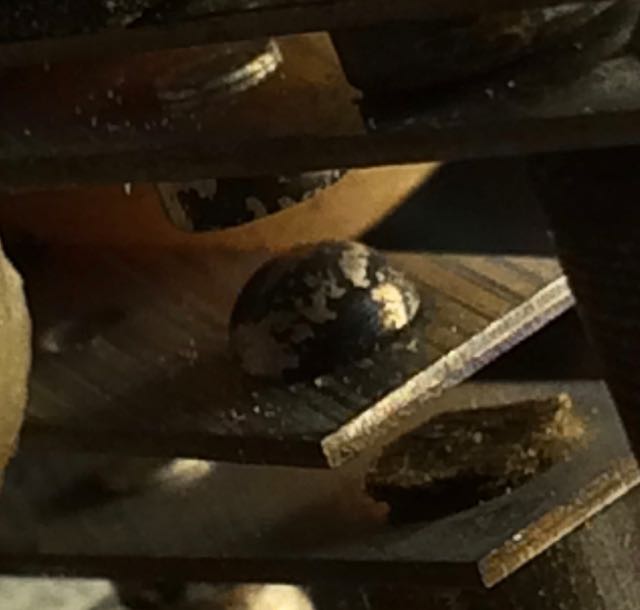
- spray this then leave it alone, yes?
- round black.jpg (33.42 KiB) Viewed 848 times
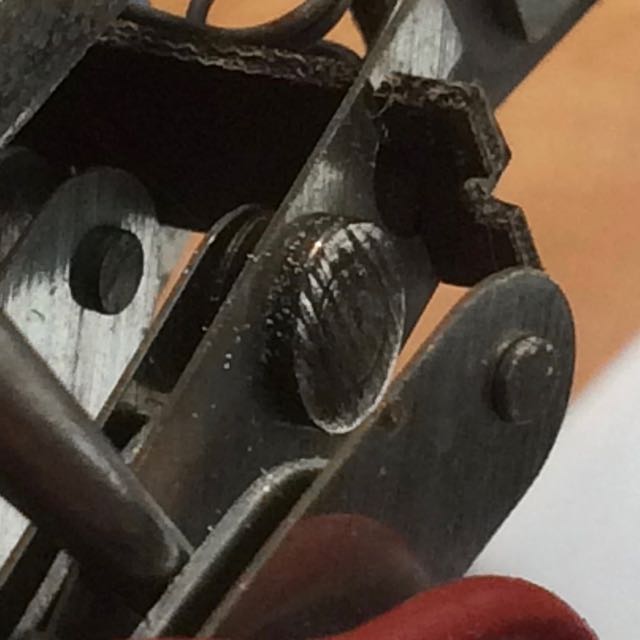
- any idea why this had these grooves?
- grooves and circle.jpg (42.4 KiB) Viewed 848 times
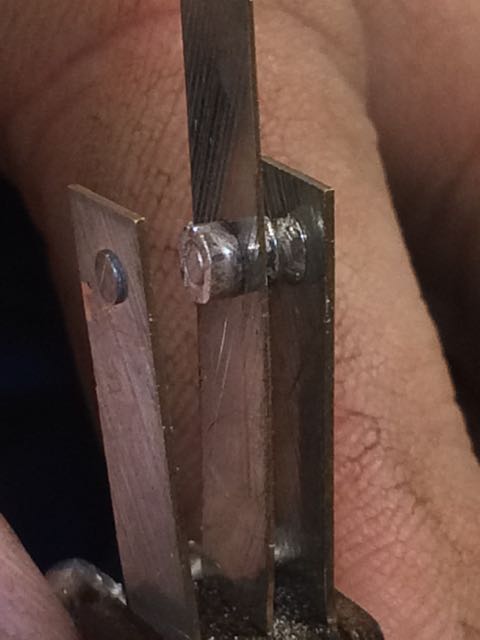
- is there any significance to the circles?
- another circle.jpg (32.12 KiB) Viewed 848 times
Who is online
Users browsing this forum: Google Adsense [Bot] and 11 guests
It is currently Thu Oct 06, 2016 6:29 am