Hello!
I have restored the reproducer to my HMW model 97 gramophone. I have put in new rubber gaskets and a new diaphragm. The question is: how, or with what, should I put the needle bar and the diaphragm together? When I unscrewed the old diaphragm there was some black stuff holding them together, what could I now use with the new diaphragm? As it is now there seems like the needle bar and the diaphragm would not make proper contact when playing a record. Thank you for answers!

Reproducer repair question
Q&A about Talking Machines from the pre-electronic era (approx. 1885-1928).
-
Joe_DS
- Forum Moderator
- Posts: 1056
- Joined: Thu Jun 08, 2006 4:23 pm
- Location: San Francisco, California, USA
There are a couple of different ways to do this.
To seal a mica diaphragm to the needle bar's foot, most collectors use a very tiny drop of melted beeswax. Normally, there's a small hole in the middle of the mica, through which a "microscopic" screw is inserted, fastening it to the needle bar's foot. (In other words, the screw goes into the small hole in the mica, and screws into a small hole in the needle bar's foot.) The wax is used to make the joint air tight.
An aluminum diaphragm could be attached in several ways. Some are fastened like a mica diaphragm, using a tiny screw. The area is then sealed with a small drop of shellac or rubber cement. In other cases, where a screw is not used, the diaphragm might be attached with solder, or even glue.
If the connection did not use a screw, then they probably used some type of cement. I'd recommend a cement that dries hard, not one that is rubbery such as silicone caulk; and use as little as possible.
If, when the needle bar's foot touches the center of the diaphragm, the position of the needle, itself, is not straight up and down, or perpendicular to the record's surface, you can align the (upper) thin portion of the needle bar by GENTLY bending it towards or away from the diaphragm as needed before attaching it.
Hope this made sense.
Joe
To seal a mica diaphragm to the needle bar's foot, most collectors use a very tiny drop of melted beeswax. Normally, there's a small hole in the middle of the mica, through which a "microscopic" screw is inserted, fastening it to the needle bar's foot. (In other words, the screw goes into the small hole in the mica, and screws into a small hole in the needle bar's foot.) The wax is used to make the joint air tight.
An aluminum diaphragm could be attached in several ways. Some are fastened like a mica diaphragm, using a tiny screw. The area is then sealed with a small drop of shellac or rubber cement. In other cases, where a screw is not used, the diaphragm might be attached with solder, or even glue.
If the connection did not use a screw, then they probably used some type of cement. I'd recommend a cement that dries hard, not one that is rubbery such as silicone caulk; and use as little as possible.
If, when the needle bar's foot touches the center of the diaphragm, the position of the needle, itself, is not straight up and down, or perpendicular to the record's surface, you can align the (upper) thin portion of the needle bar by GENTLY bending it towards or away from the diaphragm as needed before attaching it.
Hope this made sense.
Joe
O key, it is an aluminum diaphragm and it is fastened with a tiny screw. But on high tones the reproducer makes, how should I describe it, a ringing metallic sound which I guess comes from that the needle bar and the diaphragm is not fastened properly. So, in this case I would use shellac or rubber cement as recommended. Is this something that you can buy in stores or order on-line?
-
Joe_DS
- Forum Moderator
- Posts: 1056
- Joined: Thu Jun 08, 2006 4:23 pm
- Location: San Francisco, California, USA
If it makes a "ringing" sound on the higher notes, but does not buzz or rattle, chances are that it is one of two things --
The diaphragm's gaskets are exerting too much pressure on the diaphragm, restricting it's ability to "plunge" slightly with the movement of the needle bar.
or
The needle bar's pivot is adjusted too tightly, restricting its (back and forth) movement.
A third possibility is that the diaphragm, itself, is too stiff, but that can be compensated for with softer gaskets.
Since the diaphragm is fastened to the needle bar with a screw, all you'll need to do is put a grain of candle wax--about the size of an ant--over the screw and hold a match over it until it melts. (Normally, this is done on the back side of the diaphragm.)
To check the needle bar's pivot, insert a needle and move it back and forth GENTLY, in the direction required to play a record. You should see the diaphragm plunge up and down slightly. If it doesn't move, with very little force, then the pivot joint will probably require some adjustment. I'm not sure what the joint looks like, but if there are screws holding the needle bar in place, try turning each very slightly.
I should point out that the adjustment of the needle bar's pivot sometimes takes a few tries to get it just right. If it's too loose, and the needle bar shakes or moves sideways--opposite the direction required to track the record--then you'll hear a rattle on certain notes. If it's too tight, then the sound will be shrill and unpleasant on upper notes, and the mid-range and bass will be reduced. Also, care should be taken when turning the screws. Applying a few drops of light weight penetrating oil before attempting to turn them will normally help
If you are able, please post some close-up photos of the sound box.
Joe
The diaphragm's gaskets are exerting too much pressure on the diaphragm, restricting it's ability to "plunge" slightly with the movement of the needle bar.
or
The needle bar's pivot is adjusted too tightly, restricting its (back and forth) movement.
A third possibility is that the diaphragm, itself, is too stiff, but that can be compensated for with softer gaskets.
Since the diaphragm is fastened to the needle bar with a screw, all you'll need to do is put a grain of candle wax--about the size of an ant--over the screw and hold a match over it until it melts. (Normally, this is done on the back side of the diaphragm.)
To check the needle bar's pivot, insert a needle and move it back and forth GENTLY, in the direction required to play a record. You should see the diaphragm plunge up and down slightly. If it doesn't move, with very little force, then the pivot joint will probably require some adjustment. I'm not sure what the joint looks like, but if there are screws holding the needle bar in place, try turning each very slightly.
I should point out that the adjustment of the needle bar's pivot sometimes takes a few tries to get it just right. If it's too loose, and the needle bar shakes or moves sideways--opposite the direction required to track the record--then you'll hear a rattle on certain notes. If it's too tight, then the sound will be shrill and unpleasant on upper notes, and the mid-range and bass will be reduced. Also, care should be taken when turning the screws. Applying a few drops of light weight penetrating oil before attempting to turn them will normally help
If you are able, please post some close-up photos of the sound box.
Joe
I unscrewed the screws holding the needle bar (see picture) and then screwed them back, and it actually seems like the sound would be better now. I suppose it needs a little more fine tuning to sound good. Thank you!
- Attachments
-
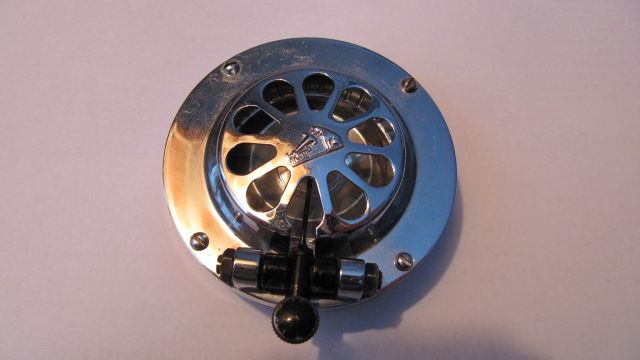
- IMG_1292x.jpg (32.7 KiB) Viewed 2488 times
Who is online
Users browsing this forum: No registered users and 1 guest
It is currently Thu Oct 06, 2016 7:51 am