Can anyone please tell me if any of these are worth anything?
Columbia - Beny Goodman (Vocal Dick Haymes) - Idaho and Take me
Columbia - Les Brown - Bizet has his day and A Good man is hard to find
Decca - Bing Crosby - Whe the white azaleas start blooming & Nobody's Darlin but mine
Columbia - Joe Turer & Pete Johnson - Roll'em Pete other side is Count Basies Blue Five - Boogie Woogie
Columbia - Frank sinatra - It happens every spring & the hucklebuck
Decca - Bing Crosby - Clemetine & Day Dreaming
Decca - Bing Crosby - Still the bluebird sings & An apple for the teacher
Columbia - Harry James - Moonlight becomes you & I've heard that song before.
Victor- Adele Rowland- Whe you see aother sweetie hanging around & Mammy O' mine.
Bluebird- Glen Miller- Boog it & Shake down the stars
Decca - Judy Garland & Gene Kelly- When you wore a tulip & For me & my girl.
Columbia- Harry James and the Boogie Woogie trio - Woo Woo - Boo Woo
Capitol - Jimmy wakely with the Cowboy band - One has my name - You're the sweetest rose in texas.
Columbia - Benny Goodman featuring Charlie Christian on guitar - The world is waiting for the sunrise - Solo Flight.
Columbia - Jimmy Boyd - I sawmommy kissing Sata Claus -Thumbelina.
Coral - Buddy Greco with the heathertones - The glory of love - I ran all the way home.
RCA Victor - Perry Como with the Ramblers - Lies & Don't let the stars get I your eyes.
Okeh - Bob Wills and the Texas Playboys - Home in San Antone & Miss molly.
The hit record - The sealandair Choir - The caissons go rolling along & America the Beautiful.
The Hit Record- The three Suns - How Many hearts have you broken & Twilight time.
Voralio- Hoosier hot shots - Swinging with Dora & Red hot Fannie
Decca - The Andrew Sisters - BeiMir Bist DuSchon & Nice work if you can get it.
Columbia - Frank Sinatra- Kiss me again - My melancholy baby.
Columbia - Beny goodman - I got rhythm & She's funny that way.
Columbia - Frank Sinatra - You go to my head & I don't know why
Decca- Bing Crosby - In my merry oldsmobile.
Apollo - Dean Martin - Walkin my baby back home - O! Marie.
Columbia - Harry James - Two o'clock jump & one o'clock jump.
The Hit Record - Willie Kelley - You'll never know & Comin in on a wing & a Prayer.
The hit Record - Bob Strong - And then you kissed me & Come out come out wherever you are.
Okeh - Tommy Tucker Time - The train song & The white cliffs of dover.
Copley - Connie Foley - Martha, the flower of sweet strabane & the valley of knockanure.
Okeh - Jim Boyd and the light crust doughboys - My gal's with my pal tonight & I had someone else before I had you.
Pkeh - RoyAcuff & his crazy Tennesseeans - Steel Guitar Chimes & Steel Guitar Blues.
Copley - Dorthy McManus - The rose of aranmore & The girl from donegal.
Pathe - The casino dance orch. - The west a nest & you - Max terr & his orch. - Sleep.
Capitol - Jo Stafford - White Christmas & Silent night.
Okeh - Louise Massey & the Westerners - The honey song & Gals don't mean a thing.
RCA Victor- Hank snow- Marriage Vow & The star spangled waltz.
The hit record - Peter Piper - What's the good word mister bluebird & There's a harbor of dreamboats.
The hit record - The sealandair chior -Semper paratus & the star spangled banner.
Okeh - Al Dexter & his troopers - To late to worry & So long pal.
London - Vera Lynn - From the time you say goodbye & Auf Wiedersehin sweetheart.
Capitol - Betty Hutton - Stuff like that there & Blue Skies.
Bibletone - Ed saler - Mother at your feet is keeling & lovely lady dressed in blue.
Continental - Sula's Musette Orch - Victry Polka & Twinkle toe polka.
The hit Record - Jack Smith Orch - Up up up & Let's sing a song about susie.
Decca - The Mcnulty Family - Over the hills and far away & Come in out of the rain barney mcshane.
London - Vera Lynn - The love of my life & Yours.
Decca - Jimmy dorsey - Brazil & Daybreak
Decca- Woody Herman - Woodchoppers ball & Big-wig in the wigwam.
Decca- Russ Morgan- The cowboy serenade & Below the equator.
Decca- Lucky Millinder- Shout sister shout & I want a tall skinny papa.
Lindwood records - Quacker city stringband - My little girl & Beer Barrel polka.
Imperial - James O'flynn - Wind that shakes the barley rakes & Mallow Fairy reel.
Columbia- Tony Bennett - Because of you & I won't cry anymore.
Okeh - Al Dexter & his troops - Pistol Packin Mama & Rosalita.
Decca - Lucky Millinder- Fightin Doug MacArthur & We're gonna have to slap the dirty little Jap.
Copley - Dorthy McManus- The little black mustache & The moonshiner.
Decca - The McNulty Family - My sweetheart & The foggy Dew.
Decca- Freddie Fisher & Orch.- Between you and me and the lamp post & Are you from Dixie.
Decca - Frank Luther & The Lyn Murray Quartet- I'll take you home again Kathleen & Little town in the old county down.
Decca- Freddie Fisher Orch.- Hot time in the old town tonight & Some of these days.
Columbia - Kay Kyser & Orch. - A romantic Guy & Til Reveille.
Columbia - Al Goodman & Orch. - Let me call you sweetheart & The waltz you saved for me.
Decca - The ink Spots- I'll never make the same mistake again & I can't stand losing you.
Decca - Harry Harden - Laughing polka & Tinkle polka.
Decca - The Merry Macs ( Gene Autry-Fred Rose)- Tweedle O'twill & Praise the lord pass the ammunition.
Decca- Dick Robertson - Blues & Somebody stole my gal.
Bluebird - Spike Joes & His city slickers - Oh! By Jingo & The sheik of Araby.
Columbia - Tony Alamo & The Kaydets- Harbor lights & Sammy Kaye Sugar Sweet.
Decca - Willie Smith- The Dipsy Doodle & That's a plenty.
Decca - Tim Donovan- The furze bush hedge in bloom & The star of donegal.
Columbia - Morton Downey - When Irish eyes are smiling & My wild irish rose.
Columbia - Morton Dowey - Kevin Barry & molly Branigan.
Columbia - Campbell & Burr - Beautiful Hawaiian love & Hawaiian hours with you.
Bluebird- Gary Gordon with his tic toc rythm- The kitten with the big green eyes & You gorgeous dancing doll.
Victor - Paul Whiteman - Hot lips & send back my honeyman.
Bluebird - Vincent Lopez - Concert in the park & igloo.
Dacce - Henry Busse - Sam, the old accordion man & Five foot two, eyes of blue.
Decca- Bob Crosby & Orch. - I'm nobodys baby & Speak easy.
Capitol - Pee Wee Hunt - Somebody else, not me & Twelfth street Rag.
Decca- The Andrew Sisters - The woodpecker song & Down by the ohio.
Columbia - Morton Downey - The rose of tralee & Where the river shannon flows.
Victor - Lone Pine- O Lord please tell me do & The waltz of the bride.
Bluebird - The mcfarlanf twins - Row that rowboat & If I could only play a concertina.
Columbia - O'leary's Irish minstrels- Paddy in London & The irish Rover.
Victor - Harry Lauder - The wee hoose mang the heather.
Decca - Dick Haymes - It can't be wrong & In my arms.
Columbia - Woody Herman ( Vocal Frances Wayne) - Apple honey & Out of this world.
columbia - Frankie Carle & his grilfriends - Diane & Charmaine.
Decca - Bobby Byrne - how many times & The ferris wheel.
Columbia - Xavier Cugat-Toca-tu Samba & Good, Good, Good.
Columbia - Frankie Carle - Liza& Ida.
Columbia - Meade Lux Lewis - Bear Cat Crawl & Shout for joy(Albert Ammons)
Victor - Fat Waller & his rhythm - Its asin to tell a lie & Oh Frenchy.
Okeh - Tommy Tucker Time - Lazy River & I love you.
Victor - Jim Miller - Charlie Farrell - Hellow Bluebird & No wonder she is a blushing bride.
Okeh - Al Donahue Vocal Phil Brito - I love you more , more every day & Hi Neighbor.
Victor - Henry Busse (Vocal Richard Barry)- Sweetheart's Holiday & Beautiful.
Bluebird - Bob Chester & hisOrch. - Strictly instrumental & Keep the home fires burning.
Victor - Vaughn monroe - Hawaiian sunset & Take it jackson.
Victor - Joseph C. Smith orch. - Hindustan & N'Everything.
Capitol - Jo Stafford - Whe you get a man o your mind & Stanley Steamer.
Columbia- Benny Goodman (Vocals Peggy Lee) Six Flats unfirnished & Why do't you do right.
Columbia- Claude Thornhill - There's a small hotel & moonlight bay.
Decca - The stardusters- The heart of Loch Lomond & The bells in her earrings.
Harmony- The Harmoians- So Does your old mandarin & Thaks for the buggy ride.
Decca - The Andrew Sisters - That's the moon my son & Pennsylvania Polka.
Columbia- Jo Stafford - Jambalaya & Early Autum.
Decca _ Bing Crosby (Priorities on Prade) Conchita, Marquita, lolita, pepita, rosita, juenita lopes & The old oaken bucket.
Decca - Ernest tubb- Missing in Action.
Decca - Bing Crosby - Silver on the stage & Mexicaln Rose
Decca - Ella Fitzgerald - I must have thatman & My heart and I decided.
Decca - Bing Crosby - The singing Mills & Devil may care.
Decca- Bing Crosby - Day Dreaming & Clementine
Decca - Glenn Miller - Always in my heart & When the roses bloom again.
Can any one tell me if any of these 78 Records are worth any
Messages about vintage 78rpm records and cylinder records.
Nothing jumps out at me as being worth much- Im no expert though.
They seem to be mainly from the 40s-50s, and there is generally more people after good 20s & 30s jazz etc. Most Bing Crosby's, Frank Sinatra's etc wre pressed in huge numbers, so they are still fairly common today, and usually sell for about $1 each in perfect condition. Being from Australia, there's a couple labels listed that I'm not farmiliar with, so some of the others might be able to fill you in about them.
Even though they're not worth much, you could still give them a good home by selling on ebay or such, or even give them to the salvo's or something if your not interested in selling them. There's some really great songs there, and they could still be enjoyed by a nutter like me! Nothings worse than hearing about people dumping piles of records in the bin, because the owner has no interest in them, or because they are of little value.
They seem to be mainly from the 40s-50s, and there is generally more people after good 20s & 30s jazz etc. Most Bing Crosby's, Frank Sinatra's etc wre pressed in huge numbers, so they are still fairly common today, and usually sell for about $1 each in perfect condition. Being from Australia, there's a couple labels listed that I'm not farmiliar with, so some of the others might be able to fill you in about them.
Even though they're not worth much, you could still give them a good home by selling on ebay or such, or even give them to the salvo's or something if your not interested in selling them. There's some really great songs there, and they could still be enjoyed by a nutter like me! Nothings worse than hearing about people dumping piles of records in the bin, because the owner has no interest in them, or because they are of little value.
Shane is correct. If you like the music then save them or offer them to some one who will appreciate them and preserve them. These are from the era where they were produced in such quantity that even though many of them are great tunes to listen to they are not worth more than $1 sold separatly and less if offered as one lot. I often pick up boxes of 50 to 100 of these for around $10.00 and hope I can find one or two gems among them but that doesn't happen very often.
-
PixieFromDixie
- Junior Member
- Posts: 1
- Joined: Thu Aug 19, 2010 5:02 am
I'm not a pro on these records, just collect the ones I like, for a couple $$'s here and there. Ebay is where I find some.
Hi, I had a quick look through your list and unfortunately nothing stands out as being of any great monetary value, but again, you may be lucky and find someone who collects these particular artists. There seem to be no particular rarities listed. As with most things, the rarer the item and the condition count for a great deal. I did see a Harry Lauder 78 and perhaps if you put that into a specialist sale you might get a bit more for that one particular record, again depending on condition. Perhaps try ebay. I sold a Harry Lauder autograph a few years back for $36.00. A couple of things to remember when selling 78s - 1. They are heavy and can be expensive if posting more than a few. 2. Make sure they are sent in a sturdy and well padded box as they can so easily be damaged in transit.
Good luck
Gary
Good luck
Gary
-
 Record-changer
- Senior Member
- Posts: 1139
- Joined: Fri Apr 21, 2006 8:11 pm
- Location: Bloomington IN USA
Most of the records that are worth money were made before World War II.
Japan had seized the only source of shellac in the world. So Western countries had rationing rules that you had to turn in one record to buy another record. Many lesser liked titles before 1941 were turned in. Those records were ground up to make new records.
Results:
- Only three copies are known to exist of the rarest record "Zulu Ball" with Duke Ellington before he was known.. A copy sold for $30,000.
- All copies of some recordings were lost.
- An LP of the musical "Raintree County" is a valuable LP, because so few copies are still around.
- Other records sold for higher prices shortly after World War II, as collectors tried to recover their collections decimated by the rationing. But after the LP came out, record companies started reissuing the old titles on LPs.
- The old classical albums that were books of discs to be played in sequence for one symphony became totally worthless, because the record collector could then get the same symphony on only one record.
- Gennett records made before the war are rare, because Gennett went bankrupt, and the bank sold all of the masters as scrap metal to recover the money on the mortgage. So no LPs were forthcoming from Gennett.
Japan had seized the only source of shellac in the world. So Western countries had rationing rules that you had to turn in one record to buy another record. Many lesser liked titles before 1941 were turned in. Those records were ground up to make new records.
Results:
- Only three copies are known to exist of the rarest record "Zulu Ball" with Duke Ellington before he was known.. A copy sold for $30,000.
- All copies of some recordings were lost.
- An LP of the musical "Raintree County" is a valuable LP, because so few copies are still around.
- Other records sold for higher prices shortly after World War II, as collectors tried to recover their collections decimated by the rationing. But after the LP came out, record companies started reissuing the old titles on LPs.
- The old classical albums that were books of discs to be played in sequence for one symphony became totally worthless, because the record collector could then get the same symphony on only one record.
- Gennett records made before the war are rare, because Gennett went bankrupt, and the bank sold all of the masters as scrap metal to recover the money on the mortgage. So no LPs were forthcoming from Gennett.
-
Ragtime Man
- Junior Member
- Posts: 22
- Joined: Thu Nov 03, 2011 2:19 am
- Location: New York State - Finger Lakes Region - USA
just came across this post - - -
and since the Sonora Fantasie phonograph which I just acquired came with approx. 50 records dating ca. 1906
and another 300 or so dating pre-WWII it looks like I'm going to have to compile my own listing and post a few for curiosity sake .....
a few that I just happened to have sitting on my desk at this time are:
Brunswick - Margie (Fox Trot) - Gene Rodemich's Orchestre 2060-A / 2060-B Home Again Blues
Victor - Just a Little Longer - Peerless Quartet 20335-A / 20335-B I'm All Alone in a Palace of Stone
Columbia - Over There - Authur Field A2470 / A2470 Send Me a Curl
Columbia - Two Black Crows Part 1-2 Moran and Mack 935D/1094-D Part 3-4 (144198)
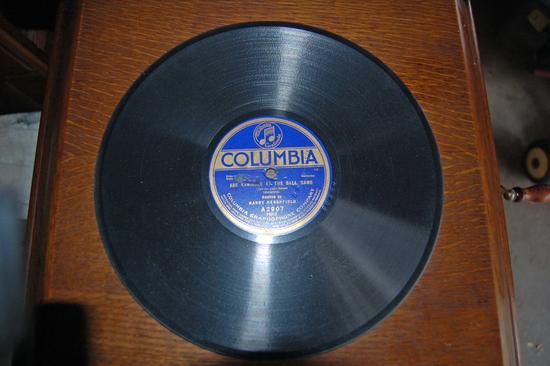
Columbia - Abe Kabibble Dictates a Letter / Abe Kabibble at the Ball Game A2907 (78953)
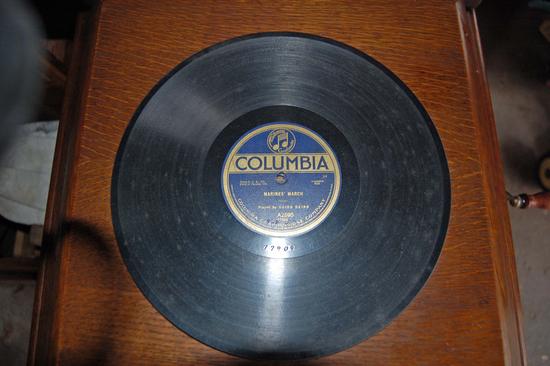
Columbia - Marines' March / Royal Flying Corps- Guido Deidro A2695 (77909)
Columbia - Highland Schottische - Peter Wyper A716 (26220)Columbia - Naval Cadets March Bell SOlo E4060 (29377)
along with -
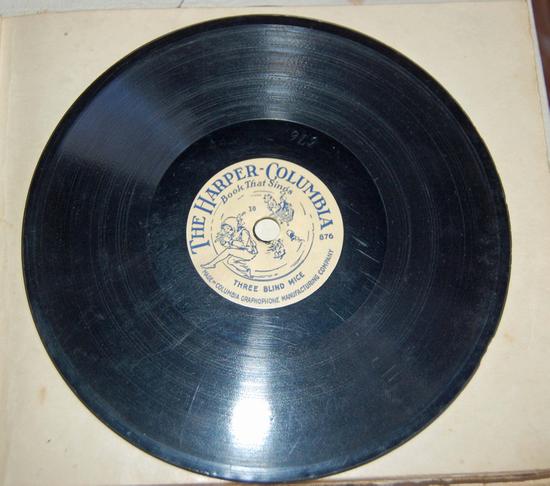
Three Blind Mice
Twinkle, Twinkle Little Star
and the record which was on the phonograph when acquired - Santa Claus Visits the Children
(which we believe was left in place the last time the phonograph had been played around 1944-45).
just to name a few .................................. for your listening pleasure ! ! !
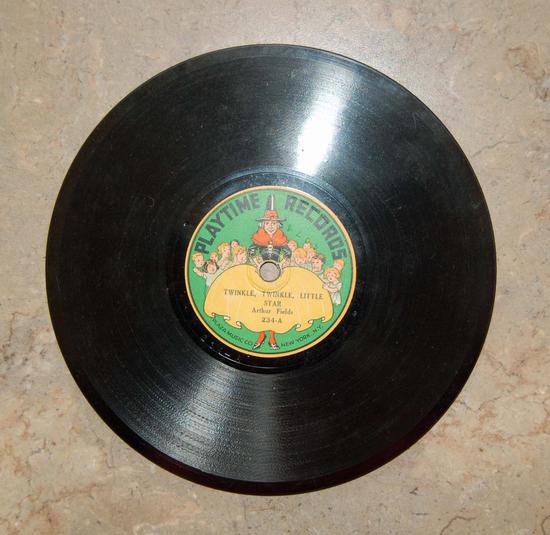
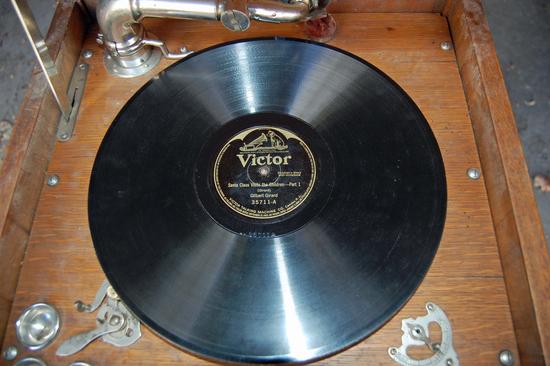
and since the Sonora Fantasie phonograph which I just acquired came with approx. 50 records dating ca. 1906
and another 300 or so dating pre-WWII it looks like I'm going to have to compile my own listing and post a few for curiosity sake .....
a few that I just happened to have sitting on my desk at this time are:
Brunswick - Margie (Fox Trot) - Gene Rodemich's Orchestre 2060-A / 2060-B Home Again Blues
Victor - Just a Little Longer - Peerless Quartet 20335-A / 20335-B I'm All Alone in a Palace of Stone
Columbia - Over There - Authur Field A2470 / A2470 Send Me a Curl
Columbia - Two Black Crows Part 1-2 Moran and Mack 935D/1094-D Part 3-4 (144198)
Columbia - Abe Kabibble Dictates a Letter / Abe Kabibble at the Ball Game A2907 (78953)
Columbia - Marines' March / Royal Flying Corps- Guido Deidro A2695 (77909)
Columbia - Highland Schottische - Peter Wyper A716 (26220)Columbia - Naval Cadets March Bell SOlo E4060 (29377)
along with -
Three Blind Mice
Twinkle, Twinkle Little Star
and the record which was on the phonograph when acquired - Santa Claus Visits the Children
(which we believe was left in place the last time the phonograph had been played around 1944-45).
just to name a few .................................. for your listening pleasure ! ! !
-
Joe_DS
- Forum Moderator
- Posts: 1056
- Joined: Thu Jun 08, 2006 4:23 pm
- Location: San Francisco, California, USA
Ragtime Man wrote:just came across this post - - -
and since the Sonora Fantasie phonograph which I just acquired came with approx. 50 records dating ca. 1906 .....
If you're going by a date that was stamped on the label, that's normally a patent related date and does not indicate when the record was recorded or pressed. (Patent dates can appear on certain products for decades.)
There's a very comprehensive discography site that lists thousands of records by label, title and serial number --
http://www.78discography.com/
While there may be a few "holes" and inaccuracies, it's a good starting place to find information about a specific record. For instance, According to the information on the site, here's when the following records were recorded:
Brunswick - Margie (Fox Trot) - Gene Rodemich's Orchestre 2060-A / 2060-B Home Again Blues -- JAN. 1921
SEE: http://www.78discography.com/BRN2000.htm
Victor - Just a Little Longer - Peerless Quartet 20335-A / 20335-B I'm All Alone in a Palace of Stone -- OCT. 21, 1926
SEE: http://www.78discography.com/vic20000.html
Columbia - Over There - Authur Field A2470 / A2470 Send Me a Curl -- NOV 1917
SEE: http://www.78discography.com/COLA2000.htm
Columbia - Two Black Crows Part 1-2 Moran and Mack 935D/1094-D Part 3-4 (144198) -- MAY 23, 1927
SEE: http://www.78discography.com/COL1000D.htm
Columbia - Abe Kabibble Dictates a Letter / Abe Kabibble at the Ball Game A2907 (78953) -- JAN 29, 1920
SEE: http://www.78discography.com/COLA2500.htm
Columbia - Marines' March / Royal Flying Corps- Guido Deidro A2695 (77909) -- JUNE 1918
SEE: http://www.78discography.com/COLA2500.htm
Columbia - Highland Schottische - Peter Wyper A716 (26220)Columbia - Naval Cadets March Bell SOlo E4060 (29377) -- JULY 1909
SEE: http://www.78discography.com/COLA500.htm
-------------------------------------------------------------------------
I should add that the recording date does not indicate when the record was actually manufactured, but normally, most records were pressed and distributed a few months after they were recorded. Depending on popularity, some records were kept in the catalogs for many years.
HTH,
Joe
-
Ragtime Man
- Junior Member
- Posts: 22
- Joined: Thu Nov 03, 2011 2:19 am
- Location: New York State - Finger Lakes Region - USA
Joe:
Thanks for all the info !
I'm guessing by the time stamp of your post that you are located in the UK or Western Europe...
In any case - when you state Serial Number, are you referring to the embossed number...
in the case of the record photo Columbia - Abe Kabibble Dictates a Letter / Abe Kabibble at the Ball Game A2907 (78953)
I'm I to understand that (78953) would be the s/n for that record ???
I didn't mean to infer that all the records shown in the photo's were ca 1906 - those were just some of the old records that were at hand.
Many, many more still in boxes waiting to be cataloged and photographed..... that's a cold -4 degree winter day project.
I'm posting a photo of the record sleeve for Twinkle, Twinkle Little Star, and am wondering would an original sleeve give more value to any records ???
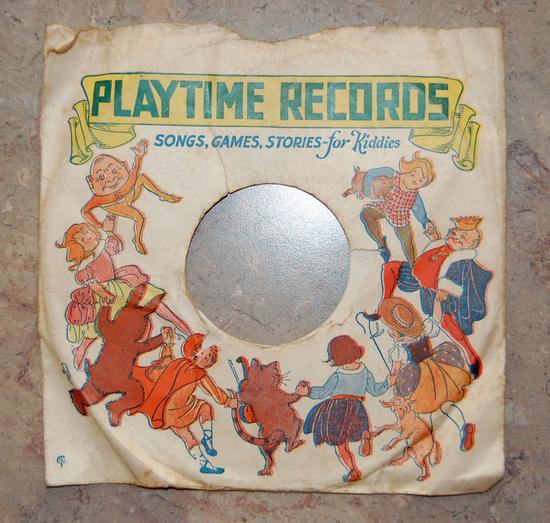
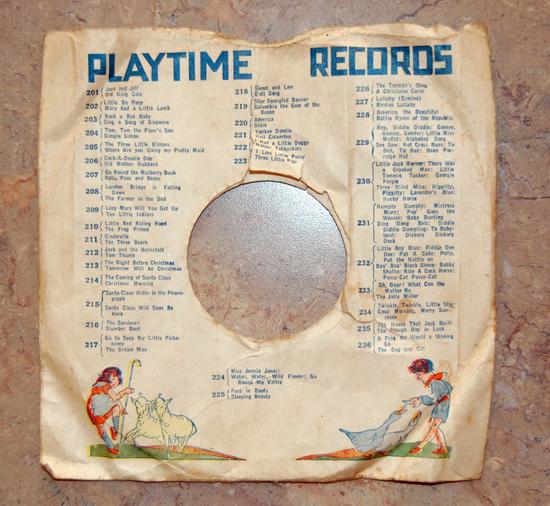
Also, here is the original booklet for The Three Blind Mice, and all the records were included.
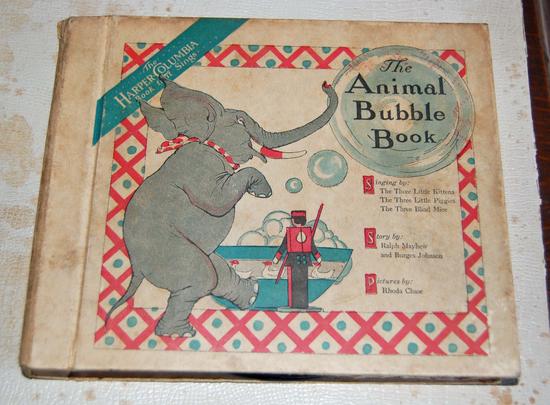
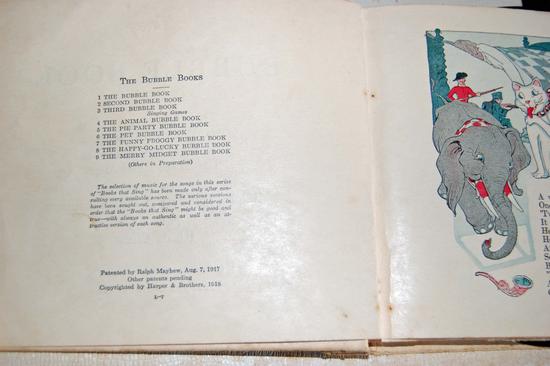
Can't wait to see what kind of reaction we get from our 3 year old granddaughter when she hears these childrens tunes.....
Thanks for all the info !
I'm guessing by the time stamp of your post that you are located in the UK or Western Europe...
In any case - when you state Serial Number, are you referring to the embossed number...
in the case of the record photo Columbia - Abe Kabibble Dictates a Letter / Abe Kabibble at the Ball Game A2907 (78953)
I'm I to understand that (78953) would be the s/n for that record ???
I didn't mean to infer that all the records shown in the photo's were ca 1906 - those were just some of the old records that were at hand.
Many, many more still in boxes waiting to be cataloged and photographed..... that's a cold -4 degree winter day project.
I'm posting a photo of the record sleeve for Twinkle, Twinkle Little Star, and am wondering would an original sleeve give more value to any records ???
Also, here is the original booklet for The Three Blind Mice, and all the records were included.
Can't wait to see what kind of reaction we get from our 3 year old granddaughter when she hears these childrens tunes.....
-
Joe_DS
- Forum Moderator
- Posts: 1056
- Joined: Thu Jun 08, 2006 4:23 pm
- Location: San Francisco, California, USA
Ragtime Man wrote:Joe:
Thanks for all the info !
I'm guessing by the time stamp of your post that you are located in the UK or Western Europe...
In any case - when you state Serial Number, are you referring to the embossed number...
in the case of the record photo Columbia - Abe Kabibble Dictates a Letter / Abe Kabibble at the Ball Game A2907 (78953)
I'm I to understand that (78953) would be the s/n for that record ???
Oops, what I should have said was "catalog number," not serial number. In the case of that record, A2907 would be the catalog number, while 78953 would be the matrix number (indicated as "MX" on the Discographical page.)
Unlike a serial number, which is assigned to identify a specific product as it comes off the assembly line, a matrix number is for internal use by the recording company. It provides information about the master recording from which the mass-produced discs are stamped. No individual record, that I know of, would have had a specific serial number differentiating it from others made from the same stamper. This page explains it better -- http://en.wikipedia.org/wiki/Matrix_numbers
By the way, I'm actually located in California, in the Pacific time zone. I'm not completely sure about this, but I think that the time stamps you see on your screen correspond to your local time zone, as set in your user control panel. In any event, I just checked on the time stamp for this post, and it matches my local time. However, prior to logging in, I see the time displayed as the local time for the Netherlands, where the Phonoland site's owner is located.
Ragtime Man wrote: I'm posting a photo of the record sleeve for Twinkle, Twinkle Little Star, and am wondering would an original sleeve give more value to any records ???
That's a very good question. For the kiddie records, I'd say definitely yes. For most others, it all depends on the age of the record and condition of the sleeve; how well-illustrated it is, etc. Certainly a very old record -- circa 1910 -- in an original sleeve containing lavish illustrations of the latest Victor Talking Machine may spark more interest among collectors than just the record, if sold by itself--especially if it is a common record.
I should add that I've known a number of collectors over the years who, when they acquire records, remove them from their original sleeves, clean them, and then put them in new ones (available from a number of sellers) in order to prevent mold damage, etc. going forward. I've done this, myself, but if a particular sleeve is in very good condition, or well illustrated, I'll normally save it.
As for "Bubble Books" and records, they are collectible in and of themselves and appeal to more than just record collectors. Here's a nice history of the Bubble Book -- http://www.littlewonderrecords.com/bubb ... story.html
Joe
-
Record-changer
- Senior Member
- Posts: 1139
- Joined: Fri Apr 21, 2006 8:11 pm
- Location: Bloomington IN USA
The catalog number is usually printed on the label. The matrix number is the number in the pressing itself. It was handwritten into the soft lacquer when the master was cut, to identify it.
The years on record labels before 1972 are usually the patent dates of the processes used to make the record. Some records in the 1950s or 1960s might have a copyright date for a certain composition. Sound recordings themselves did not become copyrightable until 2/15/1972.
The years on record labels before 1972 are usually the patent dates of the processes used to make the record. Some records in the 1950s or 1960s might have a copyright date for a certain composition. Sound recordings themselves did not become copyrightable until 2/15/1972.
I have a nice copy of Bert Williams "You Can't Get Away From It from 1914" (Columbia A1504), with the original sleeve. It's one of my favorite 78s.
-
miliksitek
- Junior Member
- Posts: 3
- Joined: Sat Sep 07, 2013 11:35 am
- Location: Serbia
Would you like to sell it, Joe ?
Who is online
Users browsing this forum: No registered users and 1 guest
It is currently Thu Oct 06, 2016 10:23 am