Hi All
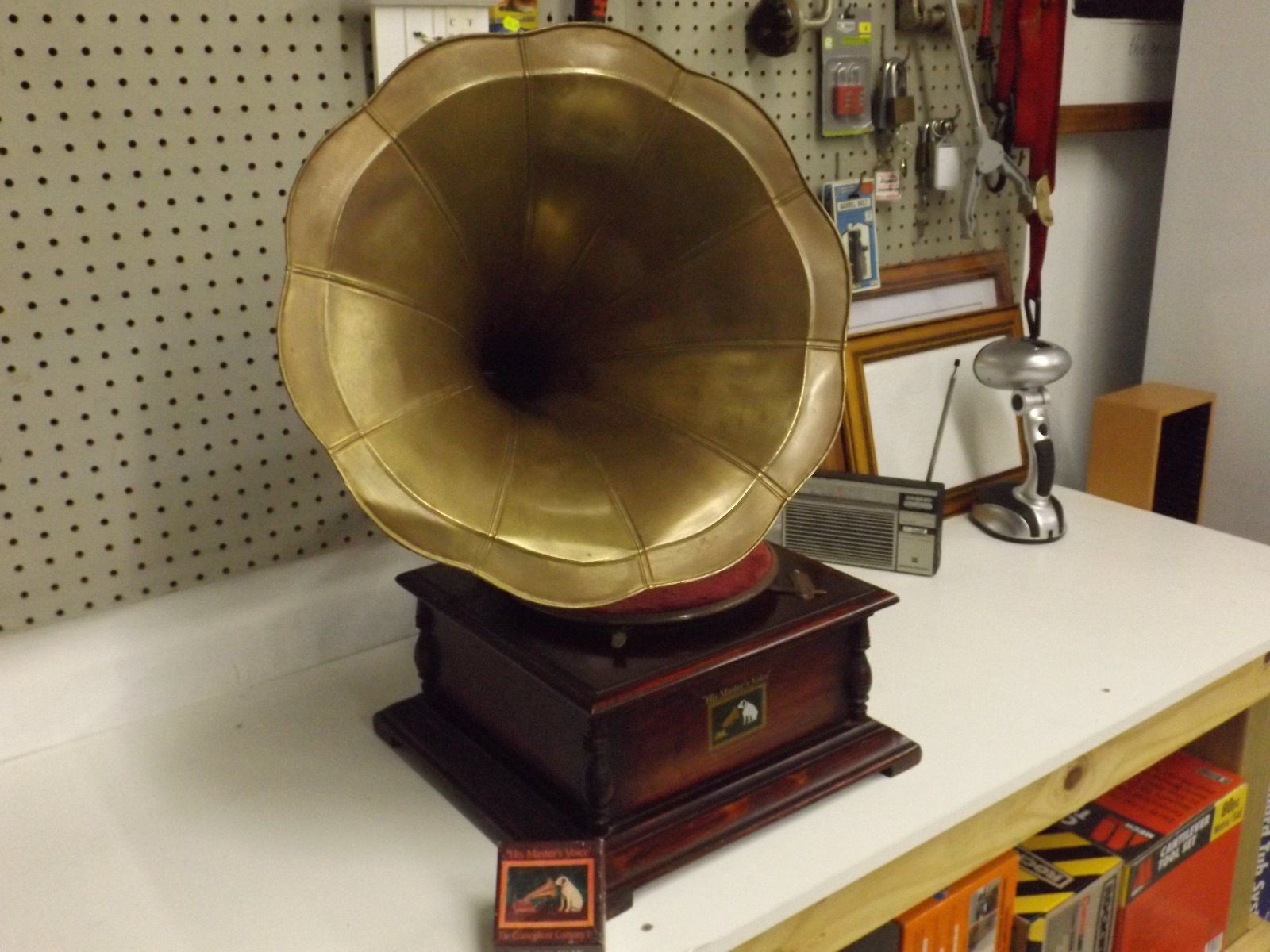
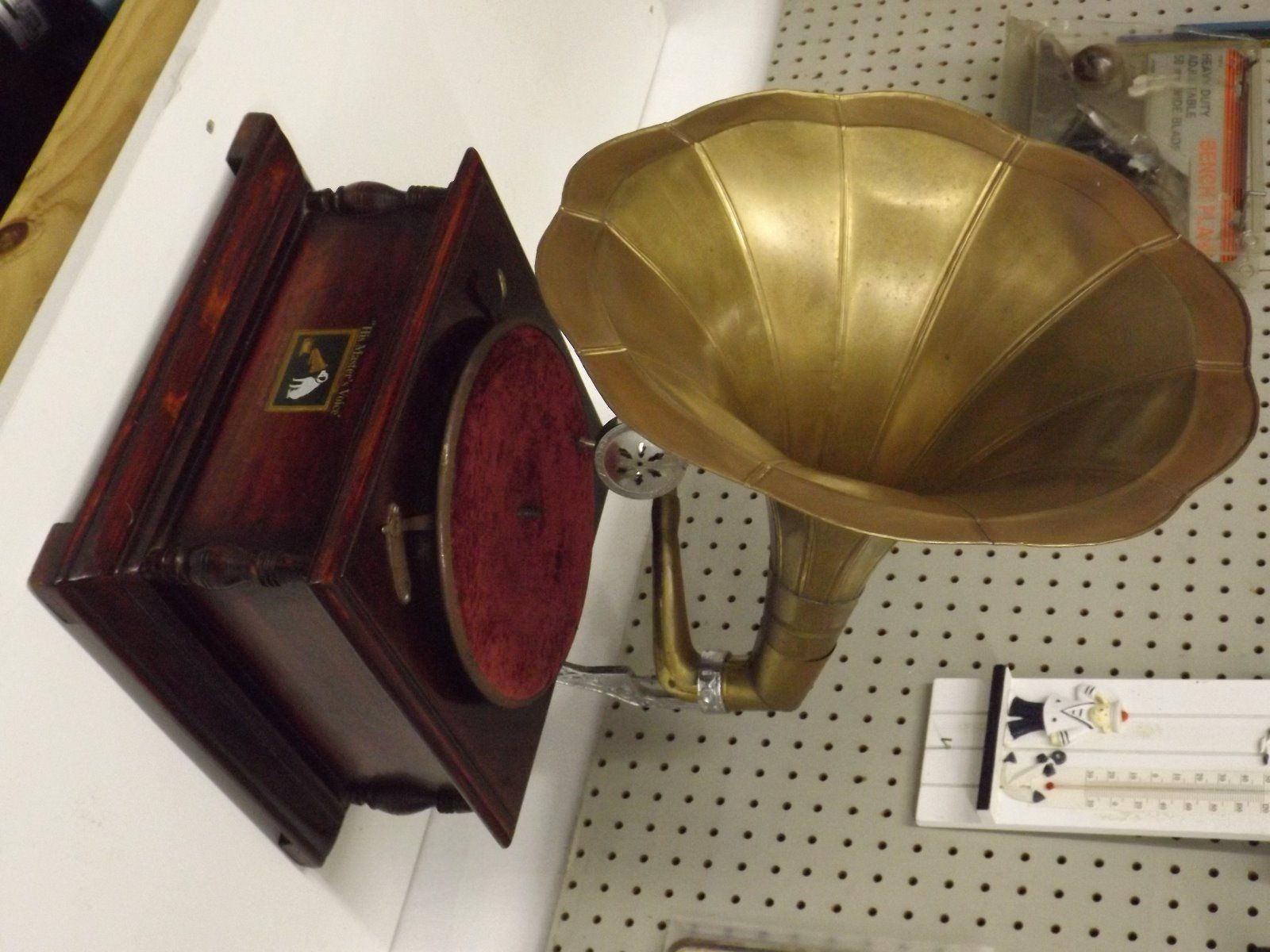
For my grandmothers 96th birthday we have found her old 78s from WW2 and wanted to buy an antique gramophone to play as her was lost many years ago. I have the opportunity to buy this one (pics attached) and I am not sure if it is original or just a reproduction. I dont know much about them but really wanted an antique for her.
Many thanks!

Antique or Repro
The lounge where a collector can relax. For topics that don't fit into the forums.
- Attachments
-
- gramophone1.JPG
- (994.3 KiB) Not downloaded yet
-
- 2.JPG
- (956.79 KiB) Not downloaded yet
-
Ron Rich
- Forum Moderator
- Posts: 8193
- Joined: Sun May 06, 2007 11:31 pm
- Location: Millbrae (San Francisco area)CA, USA
I don't know if that's old or not--but if you want to play "78's", a more modern "electric" player is needed, to avoid damage to your records--
Ron Rich
Ron Rich
-
Joe_DS
- Forum Moderator
- Posts: 1056
- Joined: Thu Jun 08, 2006 4:23 pm
- Location: San Francisco, California, USA
DON'T BUY IT. That's a crap-o-phone.
SEE:
http://www.mainspringpress.com/crapo.html
http://cameronfreeman.com/personal/cont ... ap-phones/
http://www.oldcrank.com/articles/crapop ... ction.html
The main issue with crap-o-phones, aside from the fact that they have no value from a collector's standpoint, is that there is zero quality control in terms of how they are assembled. For instance, the motors are often slapped together from mismatched parts culled from junked machines or spare parts inventories. In many cases, if they function at all, they are unable to hold a true speed, or the spring breaks after a few windings, or they jam up completely. Along this line, the reproducers are often damaged or frozen, resulting in immediate destruction of the record's groove, the tonearms don't fit properly and shake and wobble, etc.
You should also note that by the 1940s, 78s were specifically designed to be played on electrically amplified phonographs equipped with lighter weight tonearms and jewel or precious metal tipped needles. It's true that acoustic (wind up) portables were still being sold, but they were not easy on most records. So, your best bet, if you want to preserve the records, is to hunt down an authentic period model (1940s era) electronically restored phonograph, or one from a later era.
If you really have your heart set on a mechanically amplified (acoustic) phonograph, your best bet would be an HMV-102 portable -- http://www.portable-gramophone.com/hmv_gramophones.ws That model was sold from 1931 through about 1960. Some of these videos provide an indication of it's performance -- https://www.youtube.com/results?search_ ... gramophone
JDS
SEE:
http://www.mainspringpress.com/crapo.html
http://cameronfreeman.com/personal/cont ... ap-phones/
http://www.oldcrank.com/articles/crapop ... ction.html
The main issue with crap-o-phones, aside from the fact that they have no value from a collector's standpoint, is that there is zero quality control in terms of how they are assembled. For instance, the motors are often slapped together from mismatched parts culled from junked machines or spare parts inventories. In many cases, if they function at all, they are unable to hold a true speed, or the spring breaks after a few windings, or they jam up completely. Along this line, the reproducers are often damaged or frozen, resulting in immediate destruction of the record's groove, the tonearms don't fit properly and shake and wobble, etc.
You should also note that by the 1940s, 78s were specifically designed to be played on electrically amplified phonographs equipped with lighter weight tonearms and jewel or precious metal tipped needles. It's true that acoustic (wind up) portables were still being sold, but they were not easy on most records. So, your best bet, if you want to preserve the records, is to hunt down an authentic period model (1940s era) electronically restored phonograph, or one from a later era.
If you really have your heart set on a mechanically amplified (acoustic) phonograph, your best bet would be an HMV-102 portable -- http://www.portable-gramophone.com/hmv_gramophones.ws That model was sold from 1931 through about 1960. Some of these videos provide an indication of it's performance -- https://www.youtube.com/results?search_ ... gramophone
JDS
-
 Record-changer
- Senior Member
- Posts: 1139
- Joined: Fri Apr 21, 2006 8:11 pm
- Location: Bloomington IN USA
Do NOT use an acoustic player with World War II records (1939-1947). Also do not use most record changers.
Records made during World War II were made of substitute materials. Shellac was rationed during World War II because it was needed for motor and generator winding insulation for war vehicles and airplanes, and because Japan had captured the major sources of shellac.
The following make World War II records different from other records:
1. To buy a new record, you had to turn in a used record.
2. The used records were ground up to get shellac to make new records.
3. Filler materials were added to the shellac to exte3nd the supply of shellac.
4. Often the record had a layer of shellac on each side, sandwiched around a substrate of some other material. In some cases, glass was used.
5. Some 78s (including the colored ones) are made of polystyrene, not shellac.
The following effects are observed with these substandard records:
1. The records are usually very brittle and break a lot easier than prewar records.
2. The grooves wear more rapidly than those of a record made with good shellac.
3. The heavy tracking of an acoustic player has occasionally cut or broken through the shellac layer to the substrate.
4. Polystyrene records need a very low tracking force to not be worn. An acoustic player will destroy a polystyrene record.
5. It is rare, but dropping the record from the spindle has broken it. The only changers I would trust with World War II records are the Webcor and Philco changers with the s-shaped sloped spindles. I would not drop a 12" shellac record at all.
You need a 78 pickup that tracks as light as is possible.
Do not use steel needles.
Records made during World War II were made of substitute materials. Shellac was rationed during World War II because it was needed for motor and generator winding insulation for war vehicles and airplanes, and because Japan had captured the major sources of shellac.
The following make World War II records different from other records:
1. To buy a new record, you had to turn in a used record.
2. The used records were ground up to get shellac to make new records.
3. Filler materials were added to the shellac to exte3nd the supply of shellac.
4. Often the record had a layer of shellac on each side, sandwiched around a substrate of some other material. In some cases, glass was used.
5. Some 78s (including the colored ones) are made of polystyrene, not shellac.
The following effects are observed with these substandard records:
1. The records are usually very brittle and break a lot easier than prewar records.
2. The grooves wear more rapidly than those of a record made with good shellac.
3. The heavy tracking of an acoustic player has occasionally cut or broken through the shellac layer to the substrate.
4. Polystyrene records need a very low tracking force to not be worn. An acoustic player will destroy a polystyrene record.
5. It is rare, but dropping the record from the spindle has broken it. The only changers I would trust with World War II records are the Webcor and Philco changers with the s-shaped sloped spindles. I would not drop a 12" shellac record at all.
You need a 78 pickup that tracks as light as is possible.
Do not use steel needles.
Who is online
Users browsing this forum: No registered users and 1 guest
It is currently Thu Oct 06, 2016 7:29 am